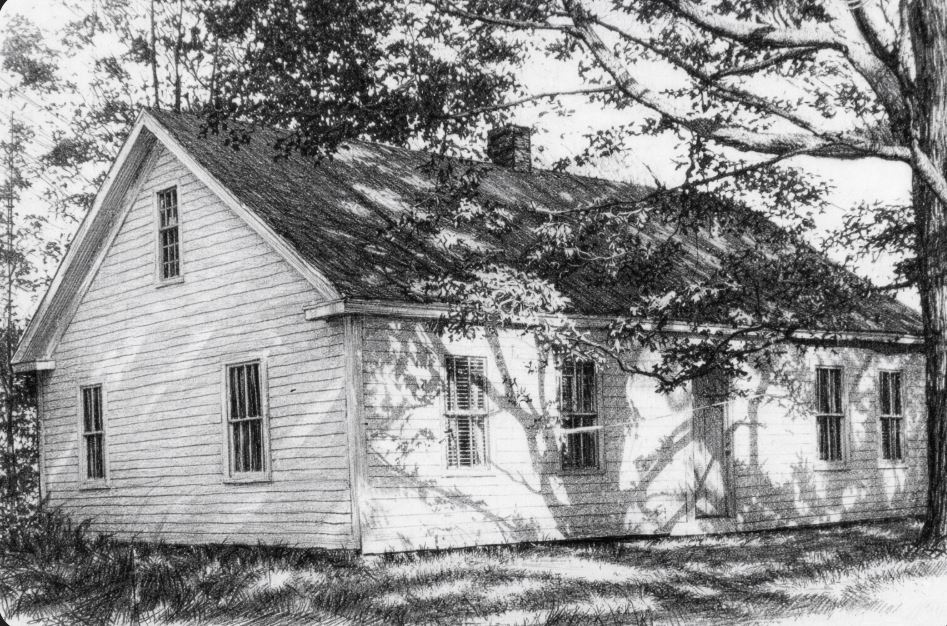
Uncovering the history of the house at 123 Pleasant Street, like many older homes in New England, requires considerable detective work. While examining deeds sheds light on the land’s history, pinpointing the house’s construction date and original builder often proves elusive. The current homeowner has undertaken exhaustive research, delving into deed records, tracing genealogy of past occupants, and even enlisting the expertise of a dendrochronologist, who used tree ring dating to determine the precise age of timber used in construction. Despite these efforts, some aspects of the home’s history remain shrouded in mystery, waiting to be revealed. Here is what has been uncovered so far, but the search continues!
Following the Records
Over the years, the land and buildings built upon it, have undergone numerous divisions and additions, often within the same family. While this was a common practice in the past and still continues today, it complicates efforts to identify the occupants of the house throughout its history. Historians must rely on available primary resources and historical clues to piece together the narrative of this iconic cape’s history.
The Plainfield 1790 census map indicates that Samuel Hayward was the original owner of what at the time was Lot 18 of Plantation #5, in this township, having been granted in the third division of Cummington, where this land was initially situated. There is no evidence that Hayward ever stepped foot on this property, and his acquisition may have been purely financial.
The Shaw/Dyer/Packard Family Connections
The early history of the property on Pleasant Street in Plainfield, Massachusetts, reflects broader patterns of land settlement, family networks, and agricultural development in the hill towns of western Massachusetts during the late eighteenth and nineteenth centuries.
The chain of title begins with a transaction in which land was conveyed to Nathan Shaw for the sum of £70 (approximately $95). At the time, land in this region commonly sold for about one pound sterling per acre, suggesting that the parcel likely comprised between 90 and 100 acres—consistent with the standard lot sizes being distributed during the initial settlement period. Surviving deed records indicate that members of the Shaw family were actively engaged in land transactions throughout the Cummington–Plainfield area during this era.
In 1778, Jonathan Shaw Sr. (1720-1793) bought this 90 acres of land and divided it between Josiah Shaw (1758-1842) and John Shaw (1763-1841), likely his sons. Like many of the original Cummington settlers, they had emigrated from long established towns located in the southeast part of the state. Most came from the towns of Abington, Bridgewater and Weymouth.
By the mid-1780s, brothers the had established homesteads on opposite ends of Lot No. 18, a roughly square tract. John Shaw settled along the eastern boundary, while Josiah occupied the western edge, approximately one-quarter mile distant. This pattern of family-based settlement was typical of the period, as related households often established farms within close proximity.
John Shaw married Hanna Dyer (1760–1819) in Cummington in 1784. It is likely that a dwelling was constructed on Pleasant Street shortly thereafter, circa 1785. Architectural analysis of the present structure suggests that portions of the existing building may incorporate elements of one of the earliest houses erected in Plainfield following its incorporation as a separate district from Cummington in 1786. Such conclusions are based on construction methods, materials, and stylistic features consistent with late eighteenth-century building practices.
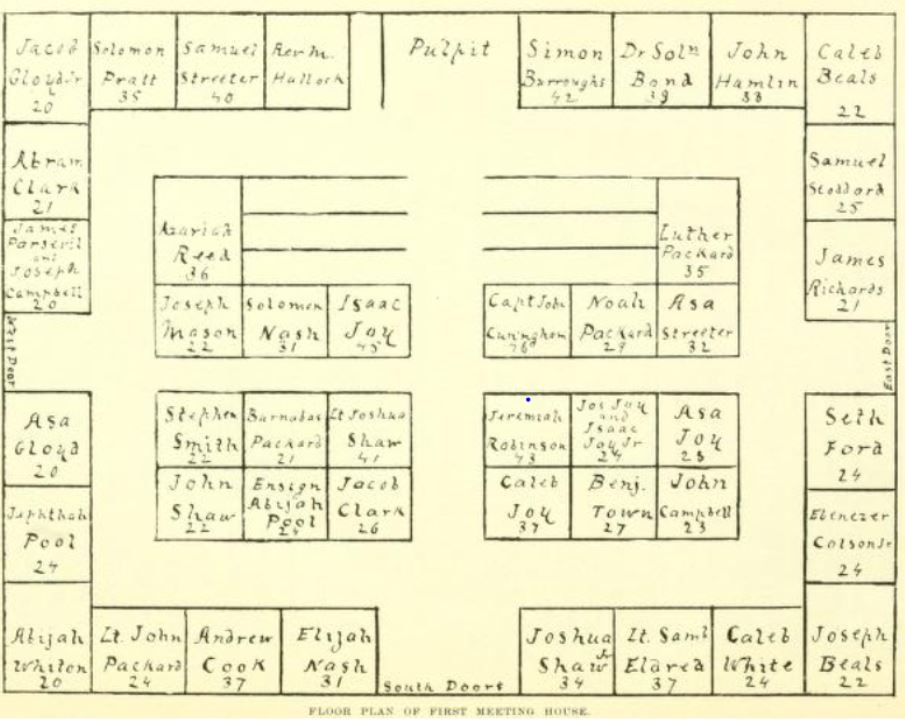
Town records further illuminate the Shaw family’s early presence. On March 13, 1786, Plainfield accepted a road extending from the property of John Jones (now known as Jones Avenue) to a bend in the road between the properties of the Shaw family, confirming that both John and his relatives were established landholders at that time. Additional records note that John Shaw purchased a pew in the newly constructed meetinghouse for $22, reflecting both his economic standing and participation in the religious life of the community.
Following the death of his first wife in 1819, John Shaw married Sarah Allen (1776–1858). Throughout his life, he remained active in town affairs, serving in roles such as surveyor of highways and hog-reeve—an official responsible for controlling stray livestock and assessing damages. Deeds from this period show that he continued to buy and sell land in the eastern portion of Plainfield for many years.
On November 14, 1792, John Shaw sold the western half of his land to Luther Packard (1789-1860), a blacksmith from Abington, Massachusetts. The purchase suggests that Packard intended to establish his trade on the property, and it is believed that a blacksmith shop was constructed there around this time, serving both the farm and the surrounding rural community.
The relationship between the Shaw and Packard families soon extended beyond business. In 1812, John Shaw’s son, Oakes Shaw (1793-1856), married Mehitable Sprout Packard (1794-1859), further linking the two families whose lives had already become intertwined through land ownership and local enterprise.
Deeds indicate that the house and property remained in the Packard family until 1823. Over the course of these three decades, the size of the holding changed several times as family members bought and sold portions of the land. Such adjustments were common in early rural communities, where parcels were often divided to provide timber, water access, or additional farmland.
By the early 1820s the property was undergoing notable changes. A deed dated February 21, 1823, records the sale of the lot while specifically reserving the entire blacksmith shop, suggesting that the forge remained an important and active feature of the property.
By 1829, the house and its associated lands had passed to the three daughters of Samuel Stoddard (1759-1838). One of these daughters, Electa Stoddard (1801-1842), whose mother was Sarah Shaw (1769-1822), thereby returning a portion of the land to the Shaw family. In 1824 Electa married Oakes Dyer (1799-1877) furthering the connections between these families. Records suggests that further subdivision occurred during this period, complicating efforts to determine precise occupancy of the dwelling.
Physical evidence indicates that significant changes to the house likely occurred in the 1820s. Dendrochronological analysis suggests that timber used in the current structure was felled in the winter season—consistent with building practices of the time—and that a new house may have been constructed around 1826, possibly on or incorporating an earlier eighteenth-century foundation. The size and configuration of the cellar support the hypothesis that an earlier structure once stood on the site.
A deed dated 1840 records the sale of the “dwelling house and outbuildings” to John Shaw (1763–1841) and Sally WhiteShaw (1767-1852) for $875. This transaction may reflect either a transfer within the extended family or the formalization of ownership following earlier, less clearly documented changes. It is plausible that by this time the original structure—after roughly four decades of use—had been substantially rebuilt or entirely replaced, potentially including the removal of the earlier blacksmith shop.
As is often the case in rural New England, deed records primarily document land ownership rather than the structures themselves, leaving gaps in the architectural history. Between the 1820s and mid-nineteenth century, the property appears to have been further subdivided among family members, with limited documentation regarding occupancy.
Mid-19th and Early 20th Century
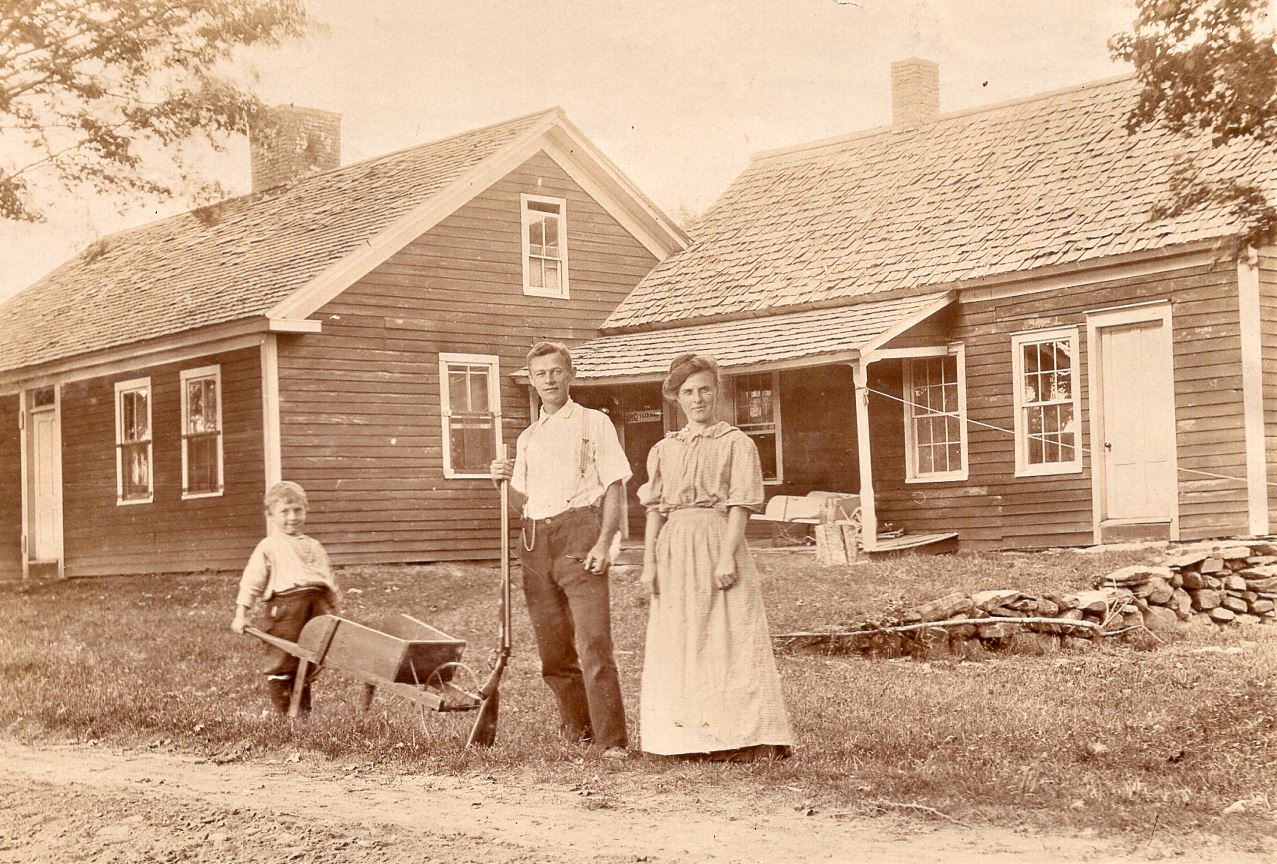
By approximately 1852, the property had come into the ownership of William Winslow (1812–1896), a farmer, carpenter, and shoemaker, who held it until about 1885. Subsequent transfers included ownership by Mondeville Bogart and, in 1887, Newton King Lincoln (1857–1930).
In 1912, Lincoln sold the house along with two parcels of land—a seven-acre lot containing the dwelling and a separate fifty-acre tract—for $1,000, reflecting the continued division and consolidation of the original holdings.
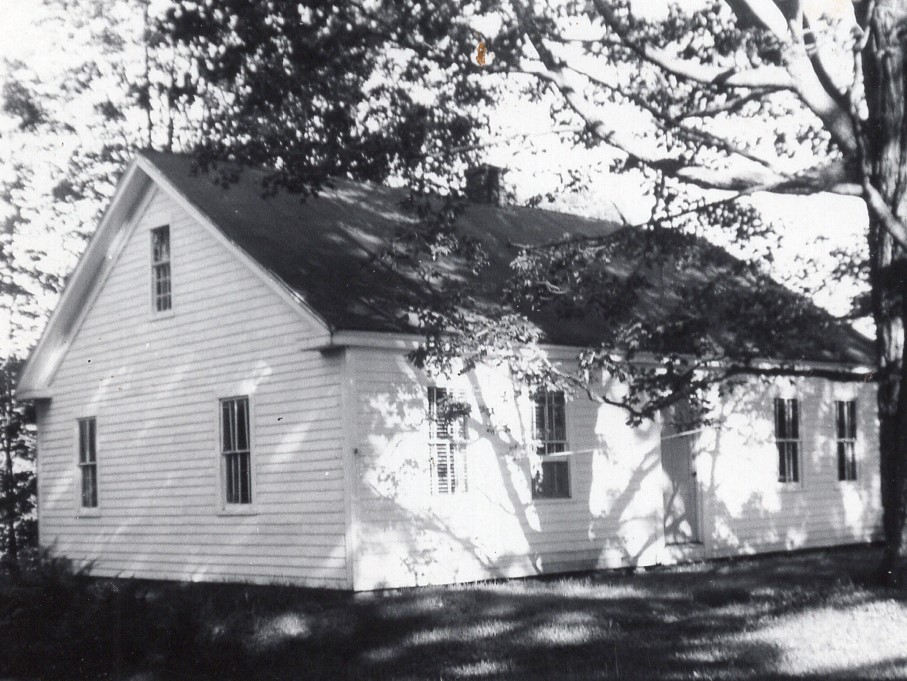
In the twentieth century, the property changed hands multiple times, though one family maintained a notably long tenure. William Henry Chellis (1879–1966) and his wife, Lettie Elvira Elmer Chellis (1891–1981), subsistence farmers, owned the property from 1911 to 1973. Physical traces of their occupancy remain, including inscriptions“Lettie Elvira” and “Alma”; the Chellis daughters, found in crayon within a front foyer closet, likely dating to the 1920s.
Subsequent ownership reflects the continued evolution of the property within the local community. The house was sold to Donald Wade in 1973, then to Charles G. Waterhouse (1933–2008) and his wife, Judith A. Gowdy, in 1979. Waterhouse, a prominent local figure, served as Plainfield’s highway superintendent until 1998 and was active in several civic and conservation organizations. The property later passed to Lillian W. Seither in 1983, to David Fobes in 1991, and finally, on June 20, 2002, to Dario and Rebecca Coletta.
The two recent families that have occupied the home, the Fobes and Colettas, have lovingly restored it to its present attractive and historical appearance.
The Coletta Family
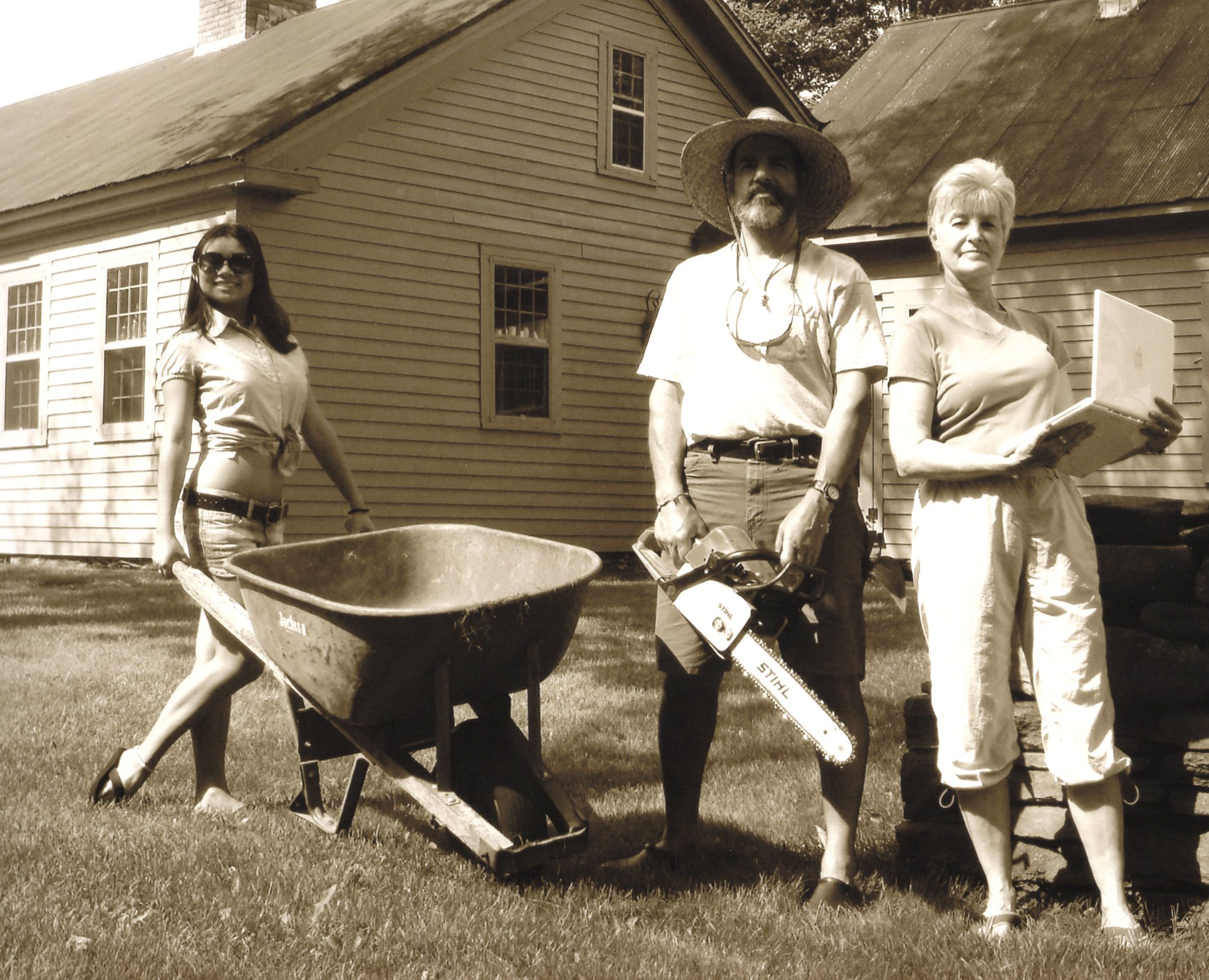
Present owner, Dario Coletta writes, “Over 20 years ago, my wife Rebecca, our daughter Melia (then 7) and I bought our house in Plainfield, moving from Ossining, NY. We were able to do so as Rebecca’s boss gave her permission to work remotely, no longer requiring her to commute into New York City on a daily basis.” A common practice today due to the COVID-19 pandemic, but not so common in 2002!
Coletta continues,”After narrowing our search to the Pioneer Valley, we were eventually shown an antique house in Plainfield. I will never forget our first impression of walking into the kitchen and standing on the deck looking over the landscape; it was love at first sight. The combination of the undulating wooded landscape with small fields divided by a seasonal stream, plus the relatively unaltered interior of this late 18th-century cape house had us hooked. Knowing literally nothing about this relatively obscure rural town, we were nevertheless determined to live here and raise our daughter in Plainfield.”
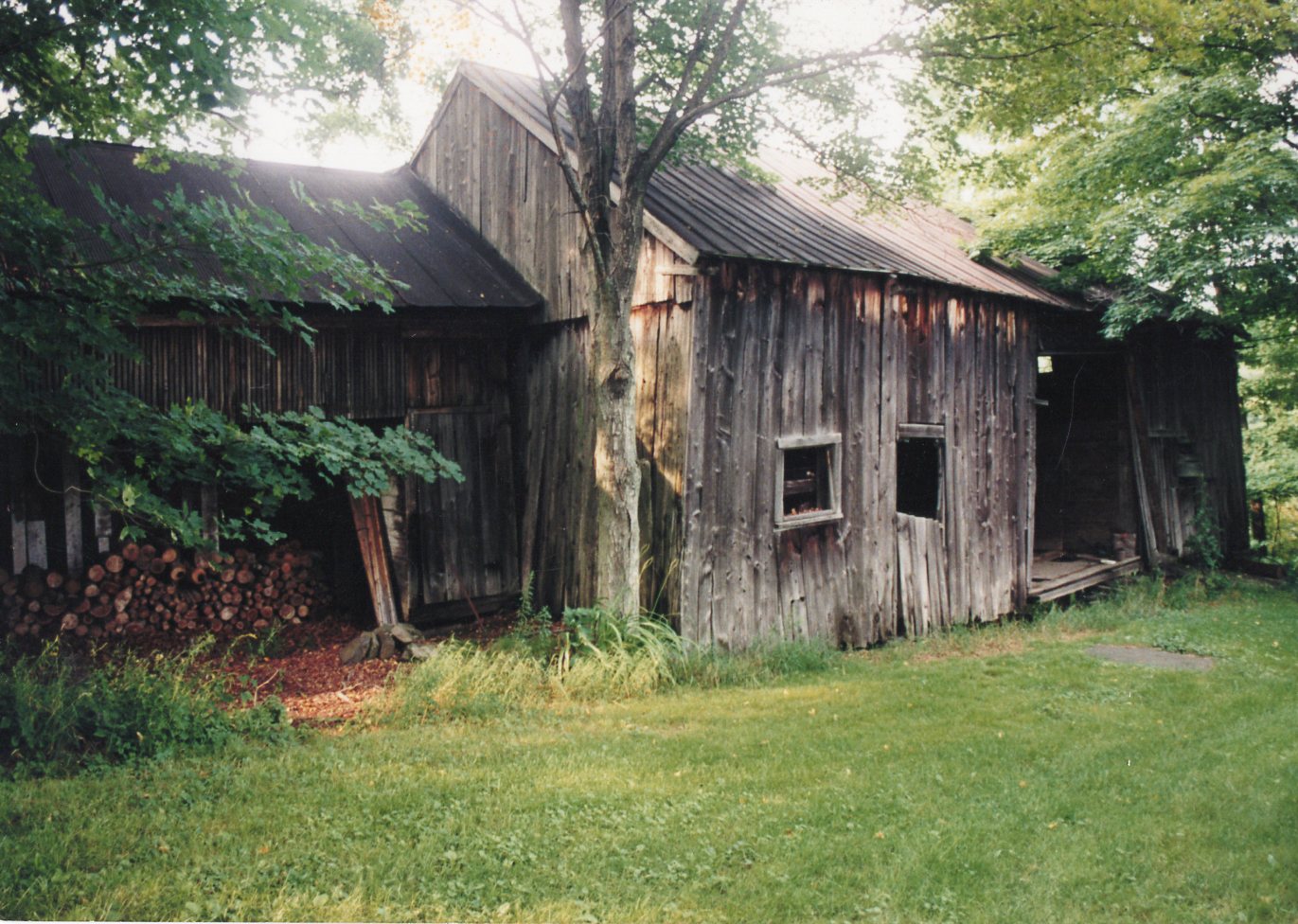
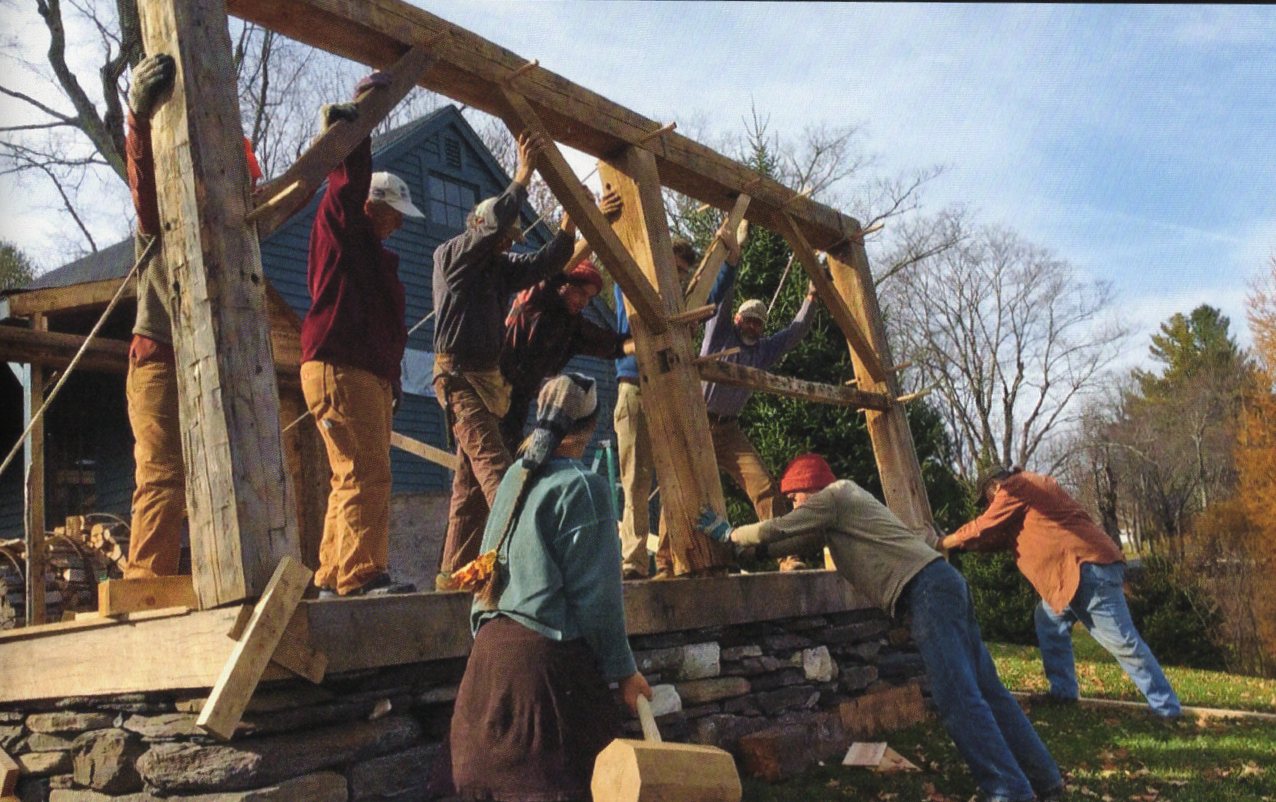
“Shortly before we bought the property, the previous owners had torn down the antique barn, which they considered a hazard, and replaced it with a two-car garage. While the garage was practical, I sorely missed the historic presence and space of the old barn, even though I had never seen it. Always on the lookout for a smaller, antique replacement structure, I was rewarded ten years later with David Kramer gifting me his carriage barn across from his house which sat about 300’ behind the Plainfield Town Hall. With help from Rich Potter in dismantling,. and Sadie Stull and crew in reassembling, the barn was attached to our existing garage, culminating in an old-fashioned barn raising. We had thus restored a bit of the agrarian historical presence that had been missing from 123 Pleasant Street.”
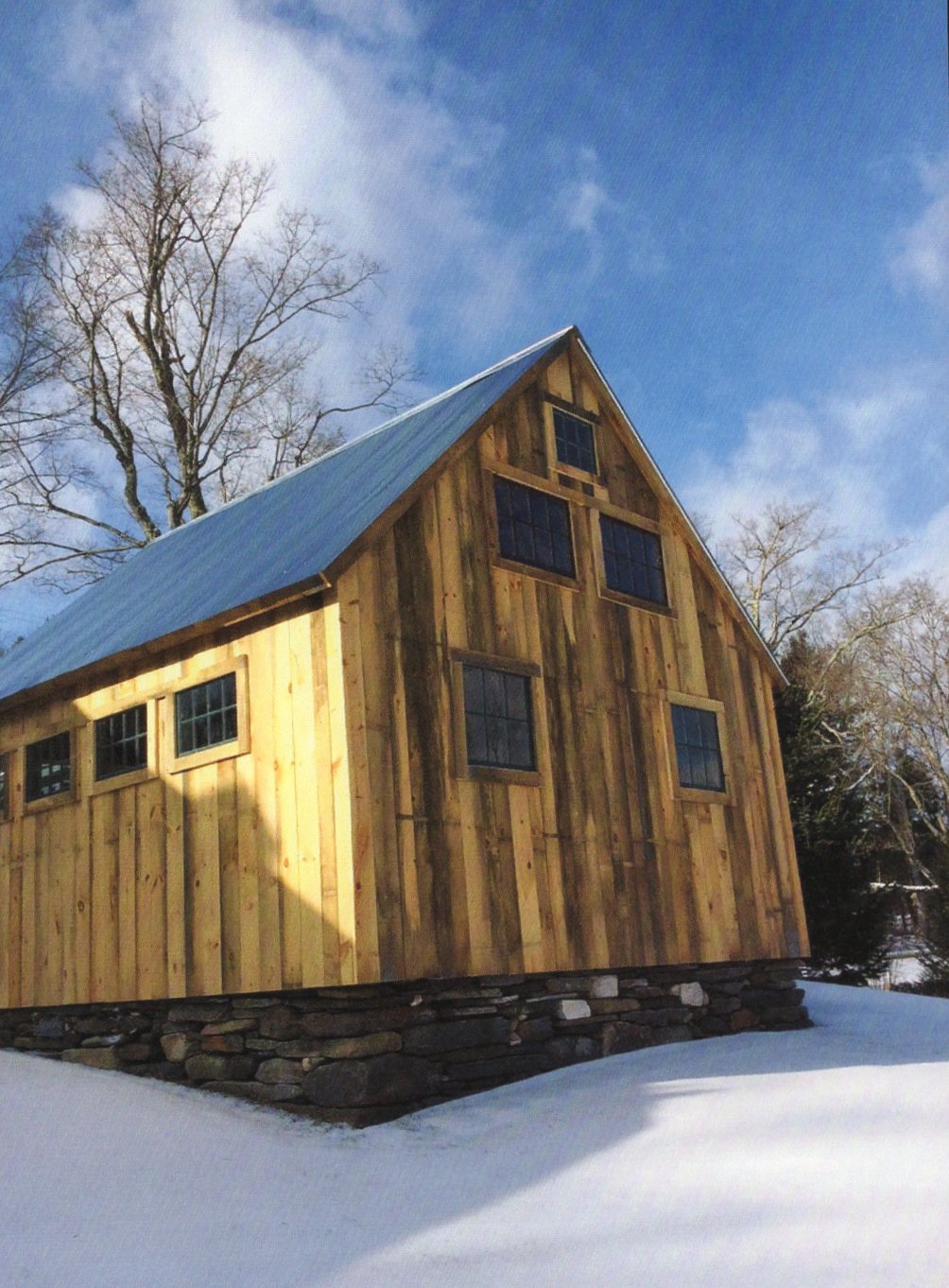
Today, this house stands as one of Plainfield’s finest historic capes, set on seven scenic acres of pasture accented by stone walls and sculptures. For over twenty years, Dario has designed and built dry stone structures across western Massachusetts. A Level II DSWA-GB–certified craftsman, he operates D.C. Stoneworks from his home and teaches at the Stone Trust in Dummerston, Vermont. Additionally, Dario holds leadership positions as the chair of the Plainfield Historical Commission and vice-president of the Plainfield Historical Society, as well as having served on multiple church positions, the cultural council, the Concerts at 7 Committee, and is an active member of the Plainfield Cemetery Association,. Rebecca has also served the town on the cultural council, Select Board, Broadband Committee, multiple church positions, and the Concerts at 7 Committee.
Architectural History
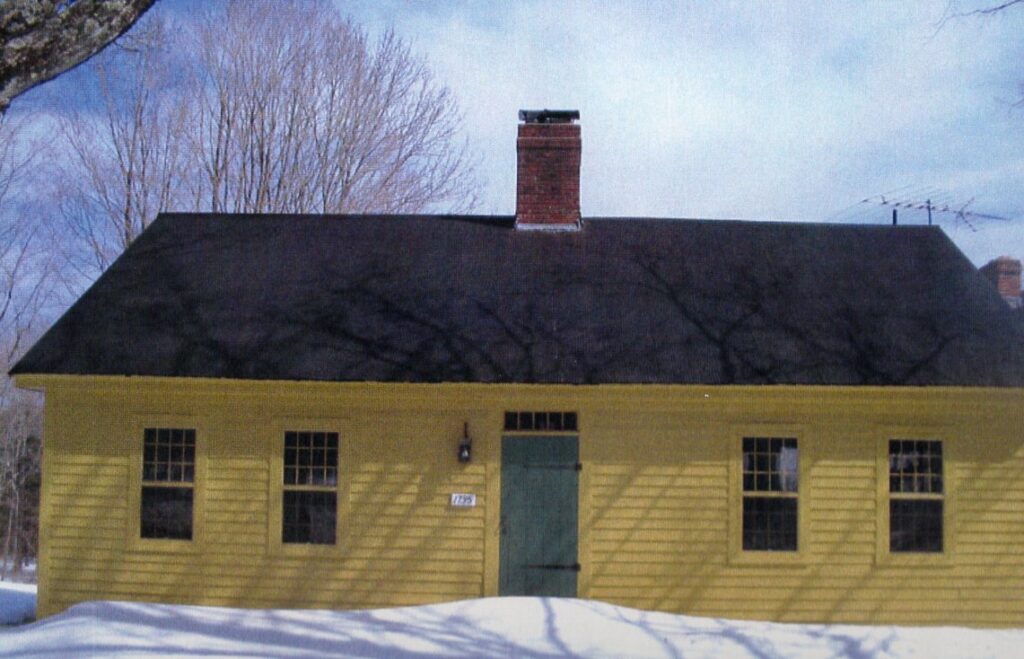
This Federal Cape stands out as one of Plainfield’s best-preserved examples. Its architectural style reflects the evolving building techniques of Plainfield’s craftsmen during the transition from the 18th to the 19th century. The main block of the house spans five bays in width and two bays in depth, featuring a prominent central chimney—a characteristic favored in Plainfield well into the 1800s. While the foundations remain low and windows are positioned close to the eaves, reminiscent of earlier constructions, the eaves extend along the gable ends, creating returns for a refined and polished appearance. Notably, there are no fixed lights in the gable ends; instead, the windows have increased in size, offering enhanced natural light. The sash windows feature a combination of 12/12 and 6/6 panes, indicative of evolving architectural trends. The center door surround boasts flat stock molding and encases a six-light transom, a hallmark of Federal-style architecture.
Attached to the south facade of the main block is a three-bay wing. Due to the slope of the land, the wing’s exposed basement provides it with a two-and-a-half-story height. This section of the house is adorned with a shed roof extension on the east side and features a central chimney. The sash windows in this wing are uniformly 6/6 paned.
Instead of dating back to the 1790s, as was originally suspected, the main part of the house, the cape, was actually constructed after 1826. This revised timeline comes from the findings of a dendrochronologist who conducted thorough core sampling, confirming the accuracy of this date. Surprisingly, the basement timber samples were primarily spruce and hemlock, a departure from the expected chestnut commonly found in old houses, challenging traditional assumptions.
After conducting extensive research into the architectural history of Plainfield’s collection of two dozen late 18th and early 19th-century capes, the current owner has made significant discoveries. Settlers’ houses from this era were typically required to meet certain specifications, including dimensions of at least 18′ x 24′ with a 7-foot stud, and an accompanying 7 acres of cleared and cultivated land. Given the heavily forested nature of the area, fulfilling these requirements was no small feat, yet many settlers rose to the challenge. Most capes from this period adhered to the standard dimensions of 32 ft by 40 ft.
However, this particular house stands out as smaller, measuring 36 ft by 26 ft, unusual for the time period. Further archaeological research is anticipated to unveil additional insights into the origins of smaller capes in the region.
Today, the Pleasant Street property stands as a layered historical resource, reflecting more than two centuries of ownership, adaptation, and community life. Its history illustrates the complexities of rural land tenure, the persistence of family connections, and the evolving nature of domestic architecture in the hill towns of western Massachusetts.
Research Notes on 123 Pleasant Street from Dario Coletta and Matthew Stowell
They Called it Pleasant Street: A Brief History of First Settlement in Plainfield, Massachusetts, 1770-1800 by Dario Coletta
This project was partially funded by the Plainfield Cultural Council and the Plainfield Historical Society