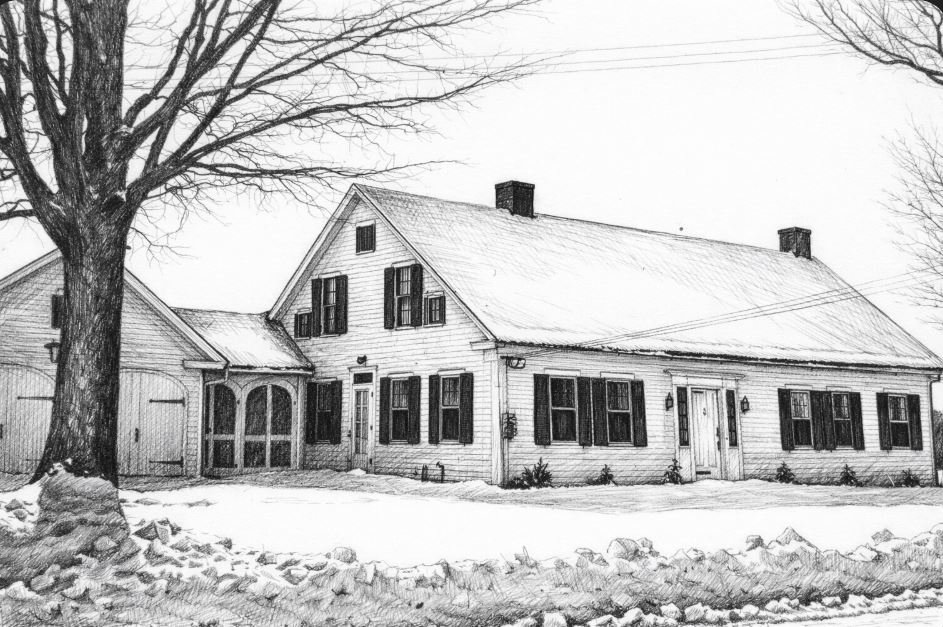
This house standing today in Plainfield Center occupies land originally granted to Eleazar Allis (1677–1758) as compensation for his service in resolving the Hatfield Equivalent controversy, a land dispute that reshaped property distribution in western Massachusetts during the colonial period. This grant reflects the broader eighteenth-century pattern of awarding frontier lands to settlers in recognition of civic or military service. In 1788, the Allis heirs conveyed the property to Lieutenant Daniel Streeter (1756–1792), who soon thereafter constructed the dwelling, establishing what would become a prominent landmark along one of the region’s principal travel routes. His older brother, Samuel Streeter (1754-1844), built a similar house nearby, across the road on North Union Street.
The Streeter Family
Lieutenant Streeter married Comfort Streeter (1763-1846) in Cummington in 1783. Daniel Streeter’s death in 1792 left Comfort in possession of the house and acreage, a circumstance not uncommon in early New England, where widows frequently managed estates and maintained family holdings. Her son Salem inherited the property, and thus remained within the Streeter family during a formative period in the town’s development.
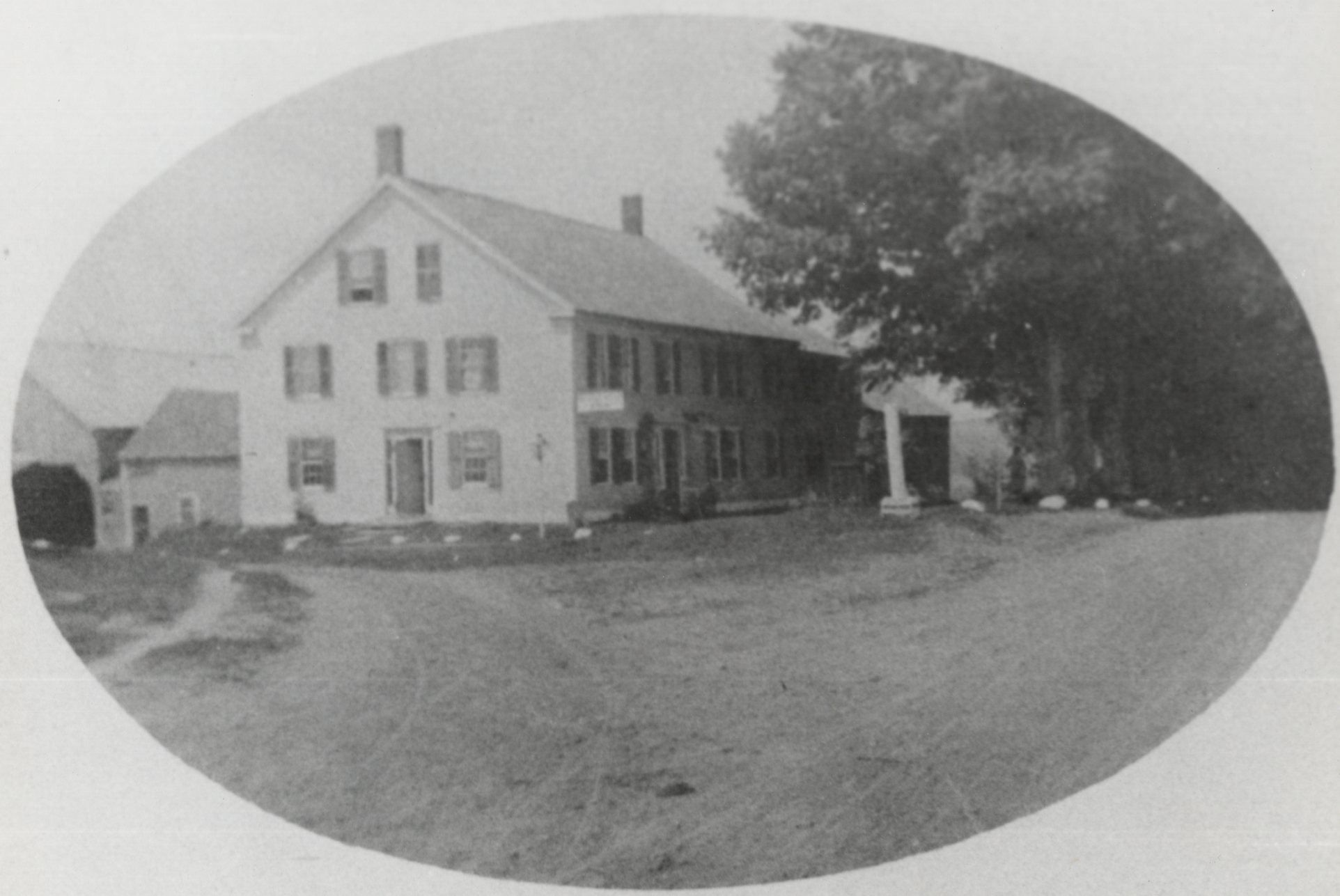
Salem Streeter (1783–1849) married Abigail Reed (1785-1855) in 1812, and together they continued to reside in the house. During the 1830s, the structure underwent significant alteration: the building was elevated, and a new lower floor was added, reflecting both evolving architectural tastes and practical needs. At this time, the property also supported potash works and, beginning in 1834, a cider mill that operated into the early twentieth century. Such enterprises were typical of hilltown economies, where agriculture, small-scale manufacturing, and home industry were closely intertwined.
Following Salem’s death in 1849, Abigail Streeter and their son, Alanson Streeter (1819-1901) adapted the property to meet the demands of regional travel and commerce by operating the house as a hotel, named the “Hampshire House,” later called the Maplewood Inn. Its location on the heavily traveled stagecoach route between Williamsburg and Adams made it well suited to serve travelers.
The Joy Family
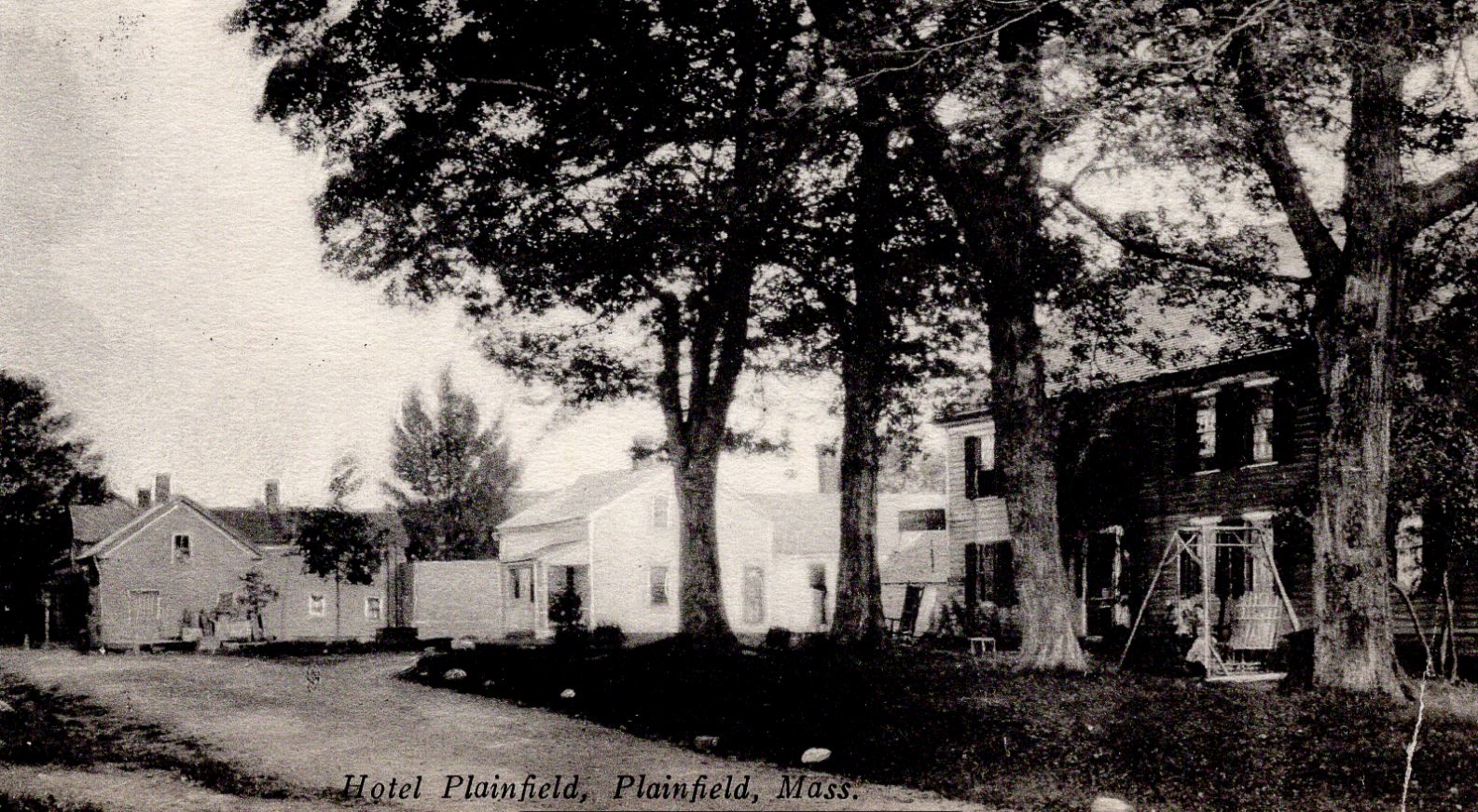
After Abigail’s death in 1855, the property was purchased by Leonard Joy (1790-1881), grandson of Isaac Joy (1732-1801), one of Plainfield’s earliest settlers. Under Joy’s ownership, the establishment continued to function as a hotel and tavern, complete with stables and, at one time, a circulating library. The hotel operated under several names over the years, including the Joy Hotel, Hotel Plainfield, Hampshire House, and The Maplewood Inn. Period postcards celebrated its “million dollar view,” attesting to both its scenic setting and its reputation as a destination.
The Joy family maintained the business until 1912. In the decades that followed, ownership passed through several hands. After 1920, the Stetson family held the property.
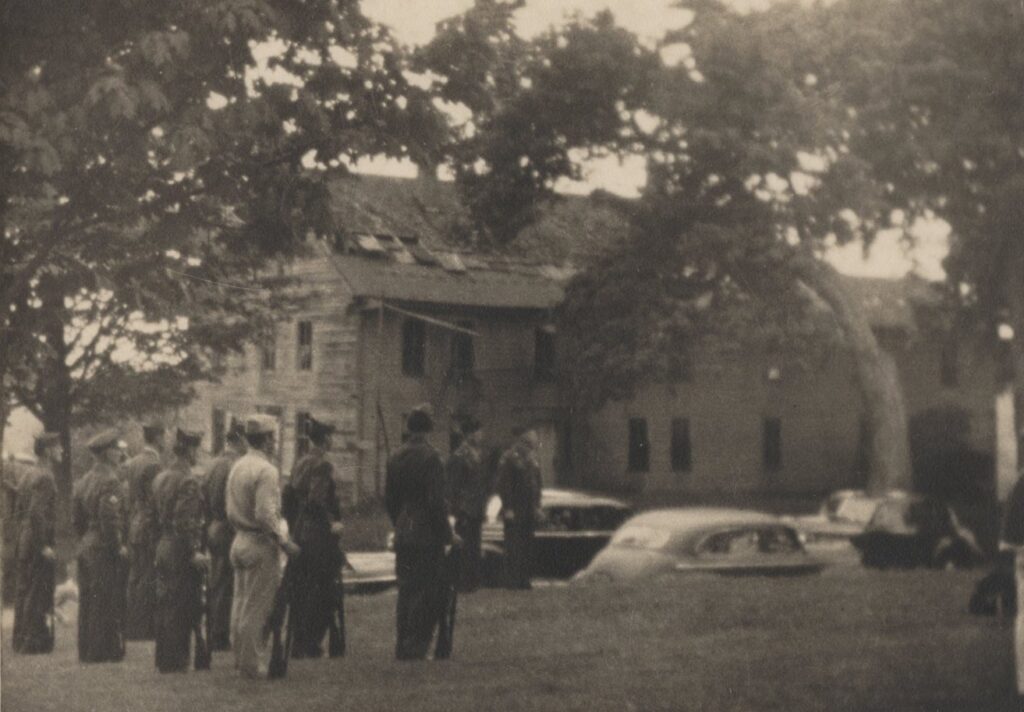
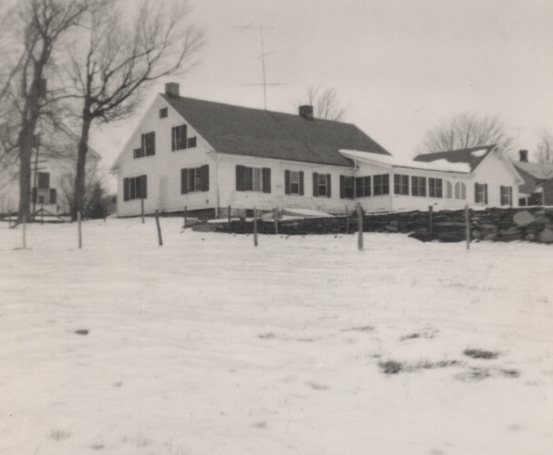
By the mid–twentieth century, however, the structure had begun to suffer from serious deterioration, particularly from rain damage to the upper story. In 1948, the property’s owner, George Bowe of Adams, undertook an extensive restoration intended to return the building more closely to its earlier appearance. As part of this work, the later additions—including the dance hall and the added second story—were removed, and the roof was restored to its original pitch and position. Substantial interior remodeling accompanied these changes, further stabilizing the structure while adapting it for modern residential use.
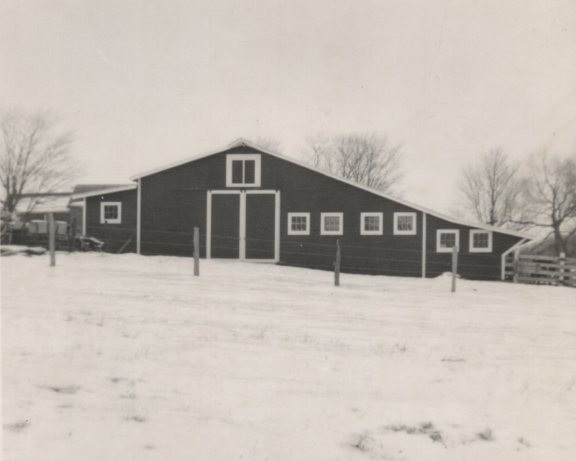
At the same time, new outbuildings were constructed, including a barn and a garage. These additions reflected broader changes in rural transportation and agriculture, marking the transition from horse-drawn travel to the automobile. With these developments, the building’s long-standing role as a stagecoach inn came to an end, and it entered a new phase as a private residence, while regaining much of the architectural character associated with its eighteenth-century origins.
The Mlynarczyk Family
In 1972 the house was purchased by its present owners, Frank and Rebecca Mlynarczyk. They first met while attending Purdue University in Indiana and married in 1968. In 1971 they bought a brownstone in the Park Slope neighborhood of Brooklyn, New York; Frank becoming successful in finance and Rebecca becoming Professor Emerita of English at the CUNY Graduate Center and Kingsborough Community College.
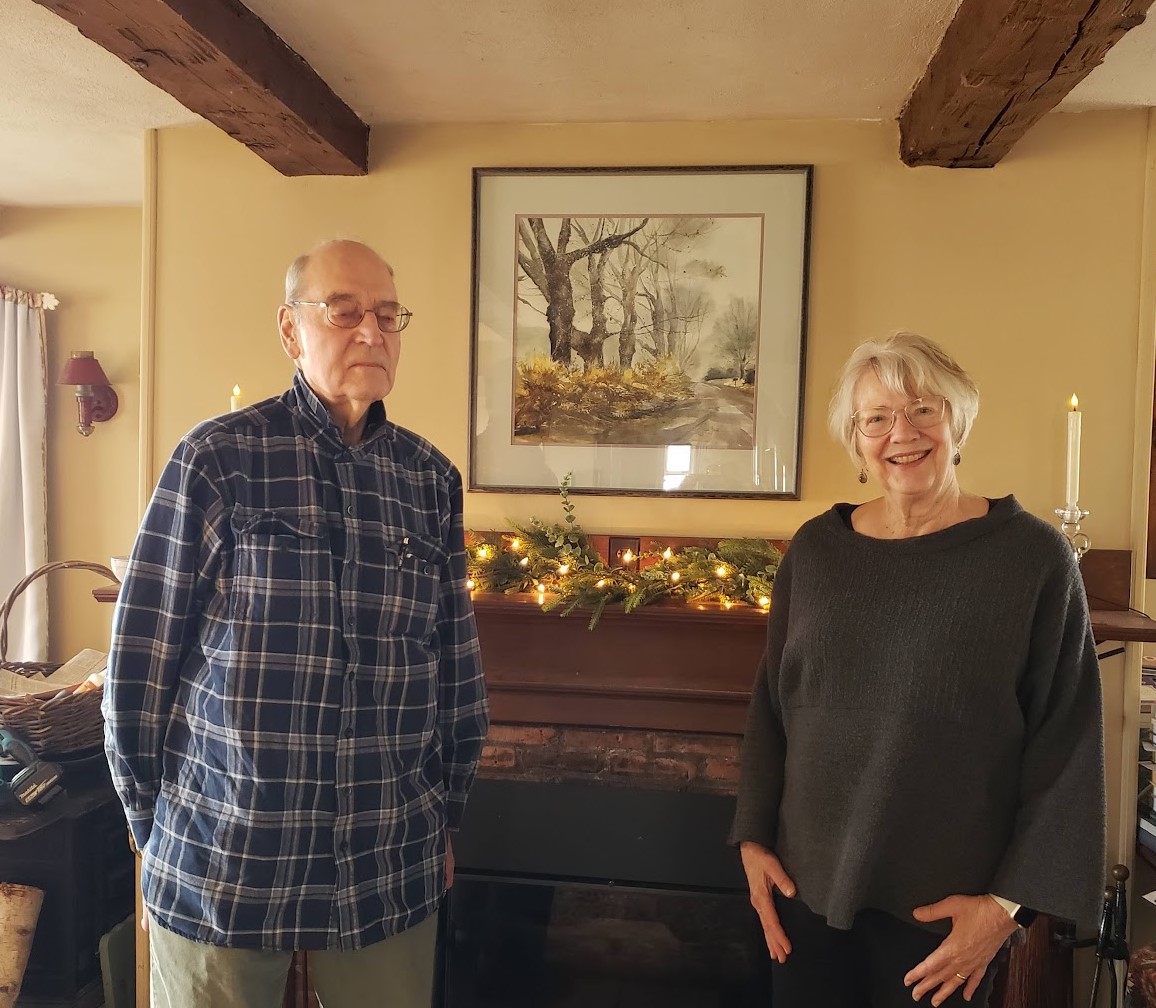
In 1972, while celebrating their fourth anniversary up in Vermont, the Mlynarczyks stopped in to visit family in Pittsfield, MA, where Frank had grown up, and saw a description in the local paper of a “homestead” for sale in nearby Plainfield – a town neither of them had ever heard of. Apparently, the house had been on the market for some time, as the real estate market was in a down swing. They drove to Plainfield, and the owner of the home, John Erdeski, showed them the house and walked them around the property of fifty acres – “more or less” – still using chains to survey the property lines. The Mlynarczyks remember John and his wife, Barbara, fondly. John had previously served as a state policeman, and was a colorful character, a gifted storyteller, and an enthusiastic gardener and pickle maker. Once Frank and Rebecca saw the property and home they were hooked and bought the place as a summer home – a place to escape the hustle and bustle of the big city!
Today the Mlynarczyks divide their time between Brooklyn and their home in Plainfield, where they enjoy hosting family and friends. Their children grew up each summer in the country and retain many fond memories of life in the hills.
Both Frank and Rebecca have long been active members of the Plainfield community. Rebecca has served for many years as publicity chair for the Concerts at 7 committee and has also been a member of the board of the Plainfield Historical Society. She is a trustee of the Plainfield Congregational Church, and has contributed extensively to research and writing about the town’s history and people.
Her work includes Remembering Fred Tirrell (copies of which are available at the Shaw Memorial Library) and The Plainfield Project: A Community Caring for One of Its Own, written to honor the life and legacy of Arvilla Dyer. She also conducted a research project on successful aging in women, based on the lives of four Plainfield residents—Kay Metcalfe, Irene Caplan, Blanche Cizek, and Anna Hathaway. The results of this study are available on the Plainfield Historical Society website in the Oral Histories collection.
Architectural Description
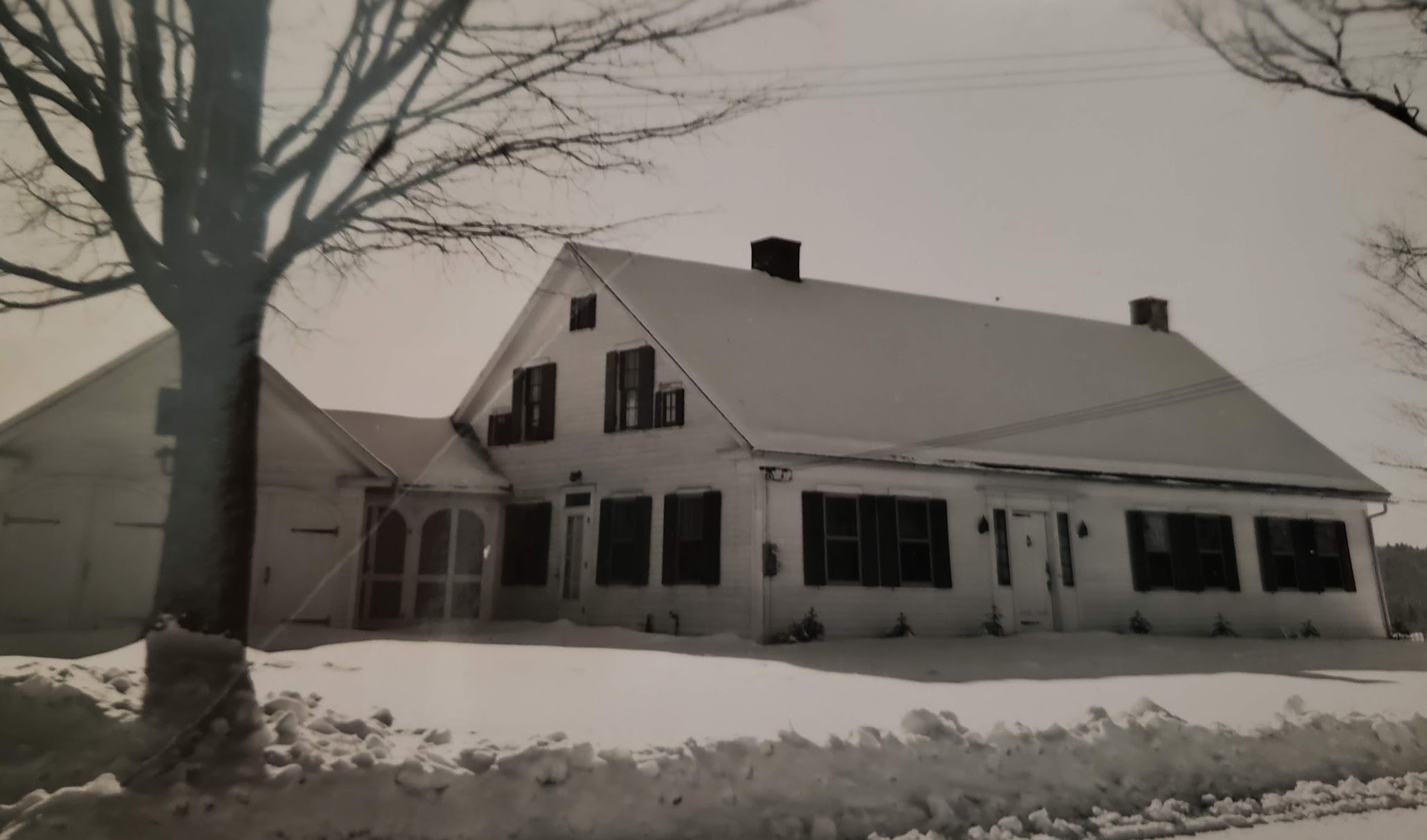
This dwelling reflects a long and complex history of alterations, resulting in its distinctive and somewhat unusual appearance. The main block is a one-and-a-half-story structure capped by a side-gabled roof. Two small chimneys rise from the roofline—one set slightly off center and the other positioned at the far western end.
The façade is seven bays in width. The two easternmost bays contain closely spaced six-over-six sash windows. The third bay forms the principal entrance, executed in the Federal style, with paired paneled pilasters supporting a simple entablature and flanked by half-length sidelights. The door itself is composed of two vertical panels. The remaining four bays are arranged as two closely paired window groupings, creating a balanced yet visually compact rhythm across the front elevation.
Fixed-light gable windows—characteristic of late eighteenth-century Federal Cape houses in Plainfield—further define the building’s architectural character. The house is three bays deep. On the east elevation, a later curved bay window projects outward, marking a subsequent alteration.
A one-story breezeway extends from the east side of the house and connects to a two-bay garage. South of the main dwelling stands a separate barn, constructed circa 1948, completing the property’s ensemble of historic and later agricultural outbuildings.
Today, the former Maplewood Inn/Hampshire House stands as a representative example of early New England domestic architecture. Its layered history—from colonial land grant to family homestead, from bustling stagecoach hotel to restored historic residence—mirrors the broader economic and social transformations of rural western Massachusetts over more than two centuries.
This project is partially funded by the Plainfield Cultural Council and the Plainfield Historical Society.