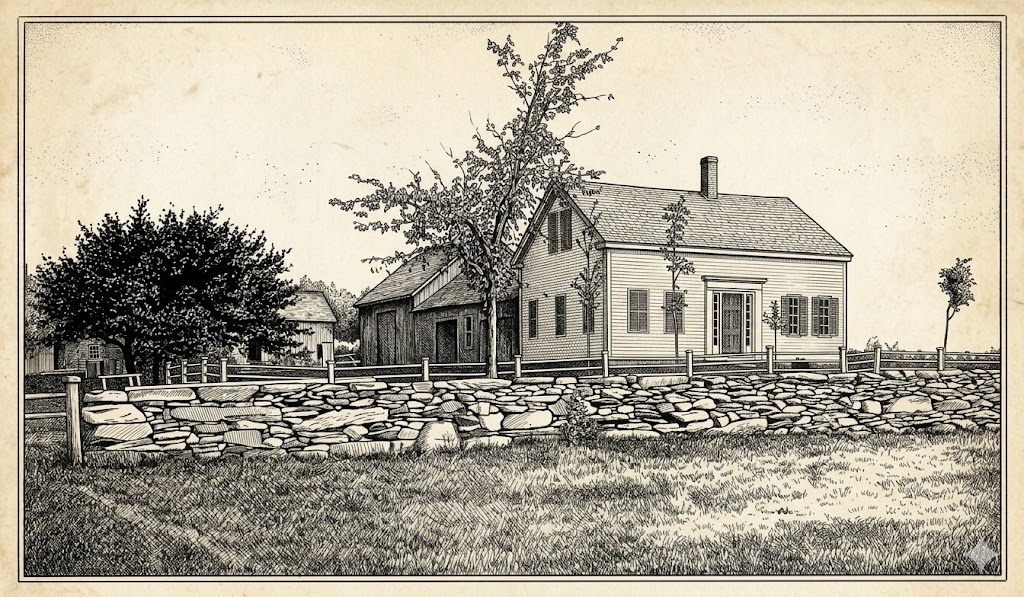
The Gun House
Historical evidence indicates that the earliest portion of the present house originated in 1847, when David Shaw (1794-1884) constructed the building as an armory—locally remembered as the “Gun House”—for the 3rd Regiment Heavy Artillery of the Massachusetts militia. In 1845 Capt. Levi N .Campbell (1812-1901) requested that an armory be built for the militia on Main Street in Plainfield across from the parsonage, probably originally built as a barn that held two sizable cannons – drawn by six draught horses each, along with ammunition, and other weapons. This regiment served the hilltown communities of Plainfield, Goshen, Chesterfield, Savoy, Windsor, Cummington, Hawley, and Ashfield, and traced its organizational roots to militia formations established in Williamsburg, Massachusetts in the late eighteenth century.
Militia service in Massachusetts was formalized by state statute in 1792, in accordance with federal legislation. Under these laws, compulsory service was required of all white males between the ages of eighteen and forty-five. Units could include infantry, artillery, and cavalry companies, with the Commonwealth supplying standard-issue muskets.
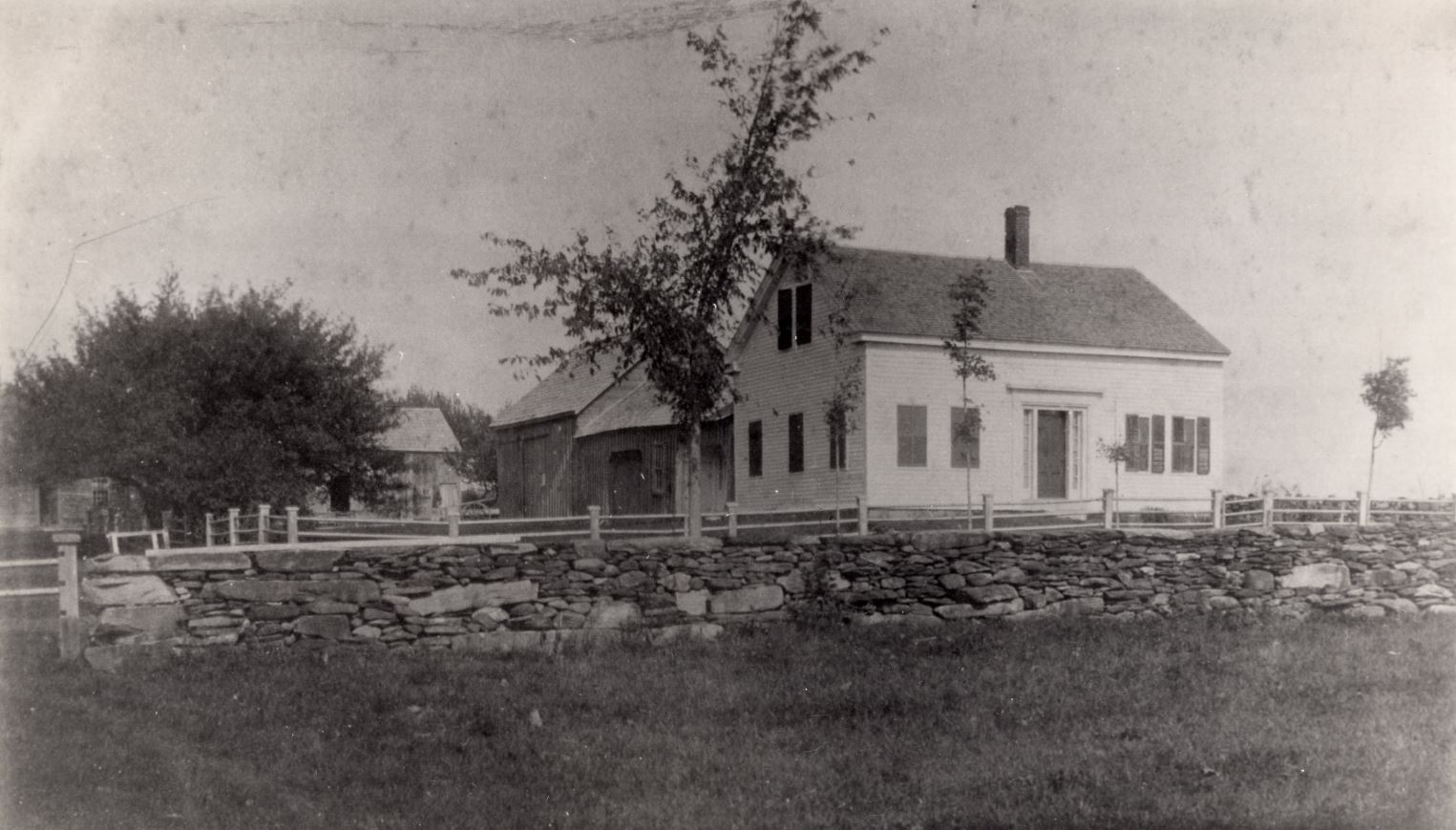
By the 1840s, however, compulsory service was abolished, and militia participation became voluntary. In the absence of immediate military threats, local companies increasingly assumed a social, as well as martial character, providing opportunities for male camaraderie, parades, and public festivities in uniform.
In 1855, a Massachusetts statute mandated the disbandment of militia companies whose membership fell below a prescribed minimum. Contemporary observers have suggested that anxieties over the growth of predominantly Irish militia units may have influenced this legislation. It is believed that the Plainfield armory remained in active use until approximately 1860, after which its military function ceased and the structure began its transition into domestic use.
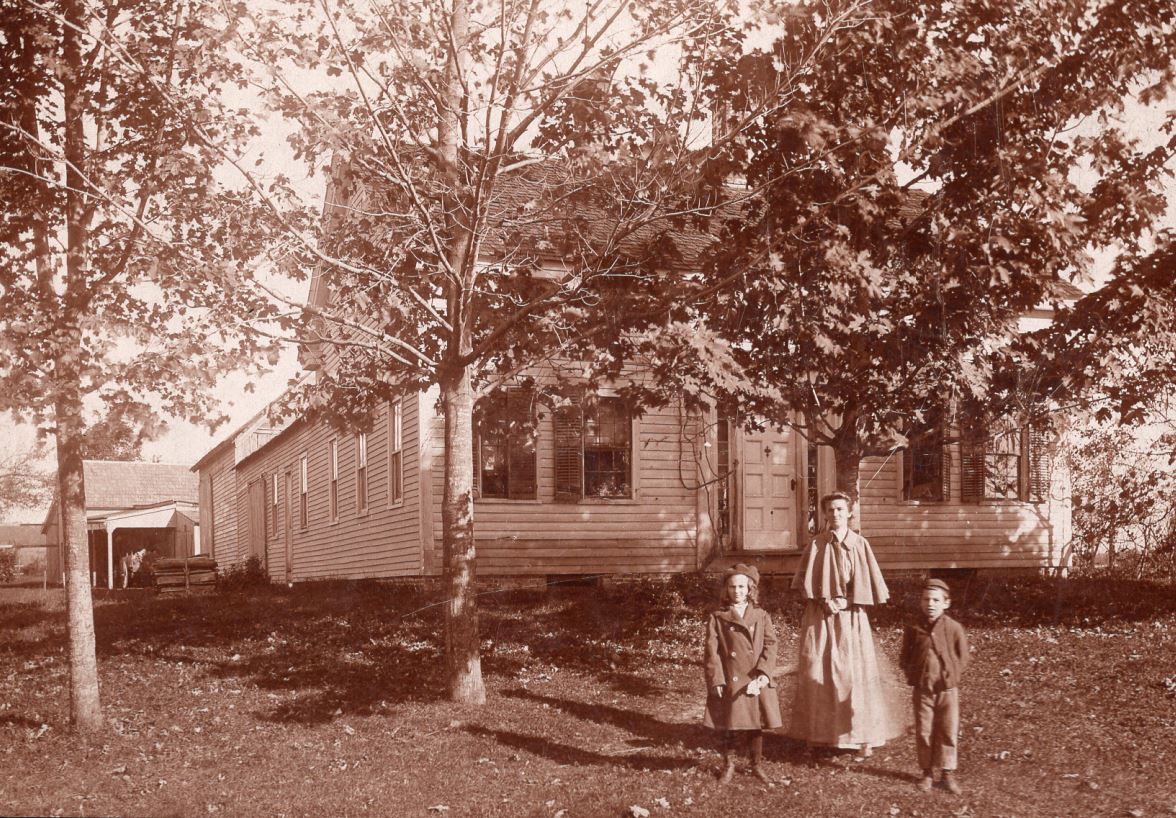
Sometime in the 1870s the house was sold to a Mrs. Francis P. Clark, and moved a quarter of a mile east on Main Street. It was quite common for houses and buildings to be relocated and repurposed in the 19th-century. Using oxen, horses, and roller systems, many buildings were moved intact to new locations, a practice that continued into the early 20th century. The structure was remodeled into an archetypical cape – similar to many in town, with a second floor erected, compromising many of the historic details.
In 1898 Orrin M. Stetson (1868-1933), who served as a musician in the 3rd Regiment Heavy Artillery of the Massachusetts militia, and his wife, Alice Lenora Billings Stetson (1874-1948) were the owners of the property, naming it the “Home Place.” Their first son Cliff Stetson (1898-1993) was born in the home and lived there for eighty-five years, buying the property in 1962. Cliff was a private in the Army in WWII and went on to become the mail carrier in Plainfield, as well as a ‘jack-of-all-trades’, working at the McCallum Farm, (now the Swift River Rehabilitation Campus), and farming and logging for many in the area.
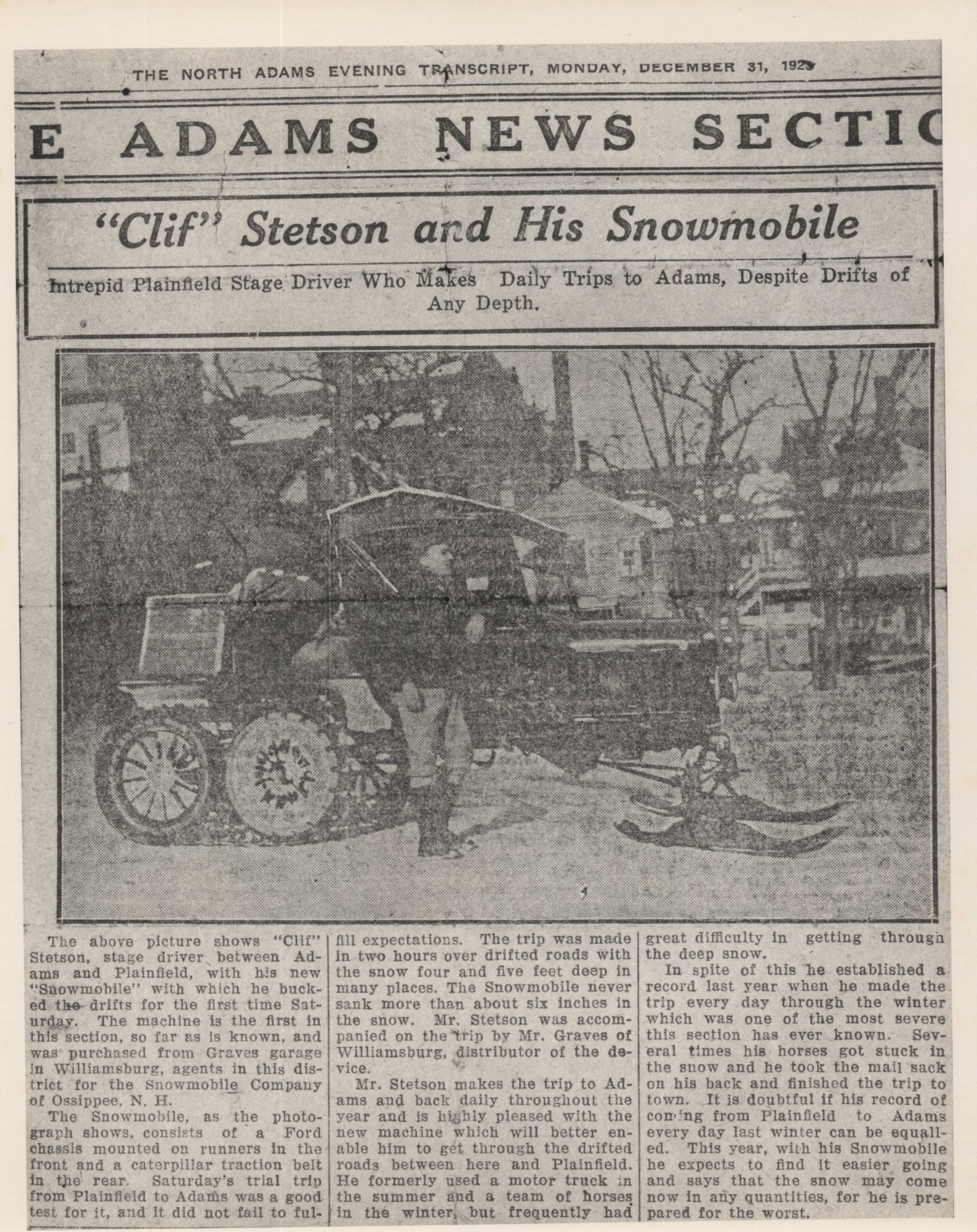
In 1979 Cliff sold the house to the Plainfield Historical Society for $25,000, with the stipulation that he be allowed to live there the rest of his life. Due to failing health, Cliff Stetson moved to a nursing home in Northampton, where he lived until the age of 93. An interview with Cliff is in the book “Old Friends” by novelist Tracy Kidder.
On June 6, 1979 became the property of the Plainfield Historical Society with the hopes of rehabilitating it as an historical museum, to be used for educational purposes, as well as for displaying farming and industrial artifacts used in the community. The purchase was made possible by a $8393 donation from Harold C. Packard; $2500 from the Plainfield Historical Society; and $3314 from private donations. Over the years volunteers worked on repairs such as a new roof, furnace, foundation, connector to the barn, water pump and insulation, all funded by the historical society and donations.
Despite years of fund raising by the Plainfield Historical Society, there were never enough financial resources to develop this building into a museum. For some thirty years it sat as an unheated, vacant building with no plumbing. In 2015 the society made the decision to sell the property; now in the hands of a private owner.
This project is partially funded by the Plainfield Cultural Council and the Plainfield Historical Society.