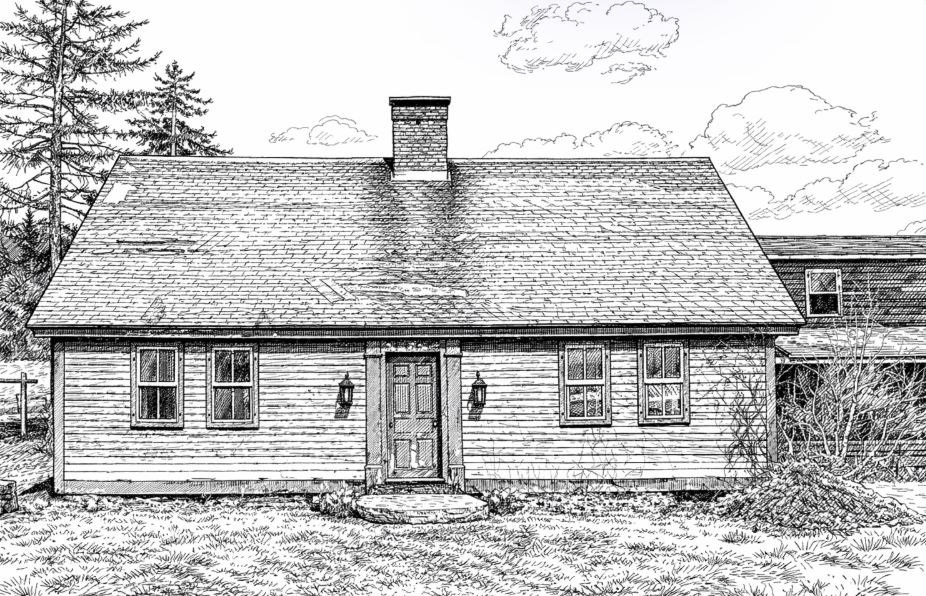
Known today as Back Acres Farm, this property is believed to contain one of the oldest surviving houses in Plainfield. Its history reflects the changing fortunes of the hilltown community from the years following the American Revolution to the present day.
The story begins with Lt. Ebenezer Colson (1716–1801), one of the early settlers of the township. Colson had established himself in the area before 1780 and played a prominent role in the new town’s civic life. After serving during the American Revolutionary War, he was elected Town Moderator at Plainfield’s first town meeting in 1785. In 1778 Colson sold nearby land to Joseph Gloyd, and a few years later, in 1783, he constructed the house that still stands on the property today.
The farm stood along what was once a well-traveled road in the late eighteenth century, though the route has since faded into a quiet dead-end lane. The nearby road name, Broom Street, hints at a small but notable local industry. Beginning in the mid-1850s, several broom-making businesses operated along the Mill River in Plainfield, and the farm’s occupants were likely involved in this trade.
Upon Colson’s death in 1801, the house and land passed to his son, Ebenezer Colson Jr. (1764–1856). He and his wife, Lovinia Packard Colson (1763–1837), lived on the farm for several years before selling the property in 1815 to Brackley White Shaw IV (1790-1869) of Abington. Shaw had previously lived on another Plainfield farm later associated with Jared Dyer. During the War of 1812, Shaw commanded a battery stationed on an island in Boston Harbor. In 1825 he left Plainfield for Ira, New York, and about a decade later moved west to Michigan, becoming one of the early settlers of that state. His family remained notable in later years: his son Brackley Shaw Jr. (1818-1917) served for fourteen years in the Michigan legislature, including six years as a state senator, while another son, Rev. Horatio Watson Shaw (1822-1910), traveled to India in 1850 to direct the Mission College at Allahabad, returning after six years of service.
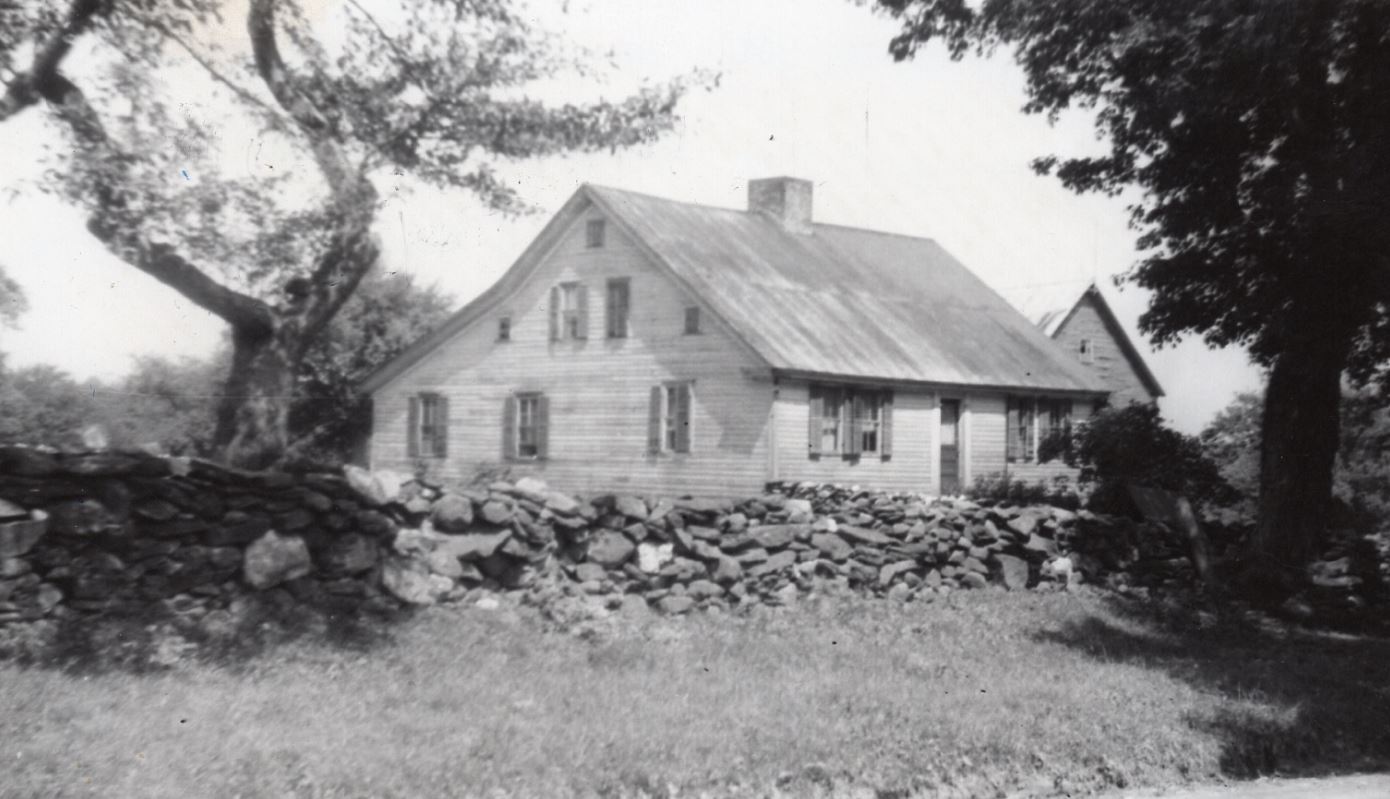
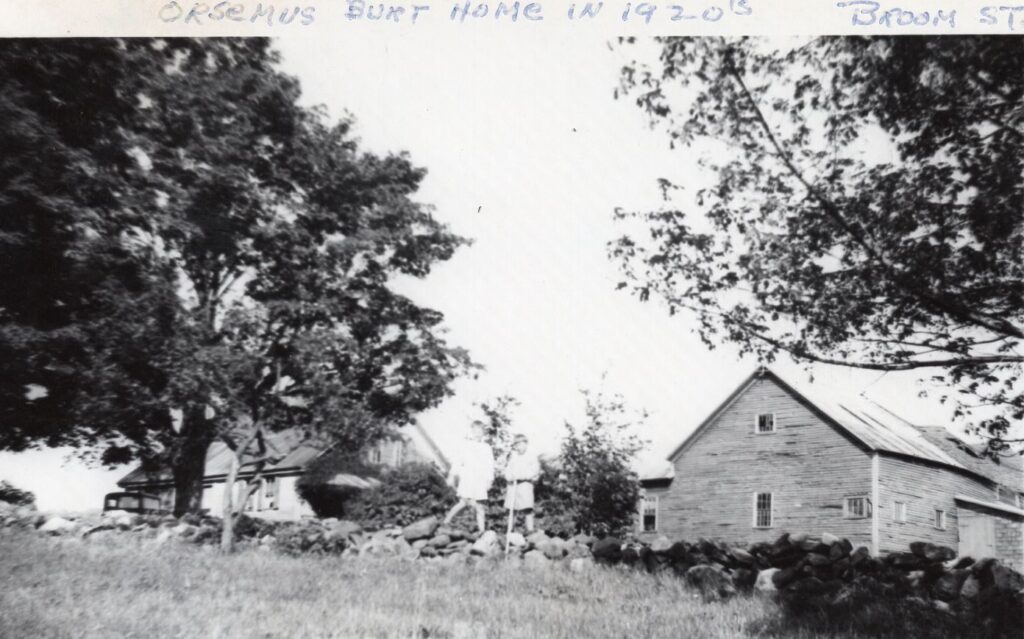
Before leaving the region permanently, Shaw sold the Plainfield farm on November 11, 1823, to Jared Dyer (1796–1874) of nearby Ashfield. Jared Dyer’s son, Alfred Thurston Dyer (1839–1906), formally acquired the house on January 7, 1868. In 1879 the farm passed into the hands of Edmund Burt (1855-1942) and his family, who owned it for more than sixty years, until 1941.
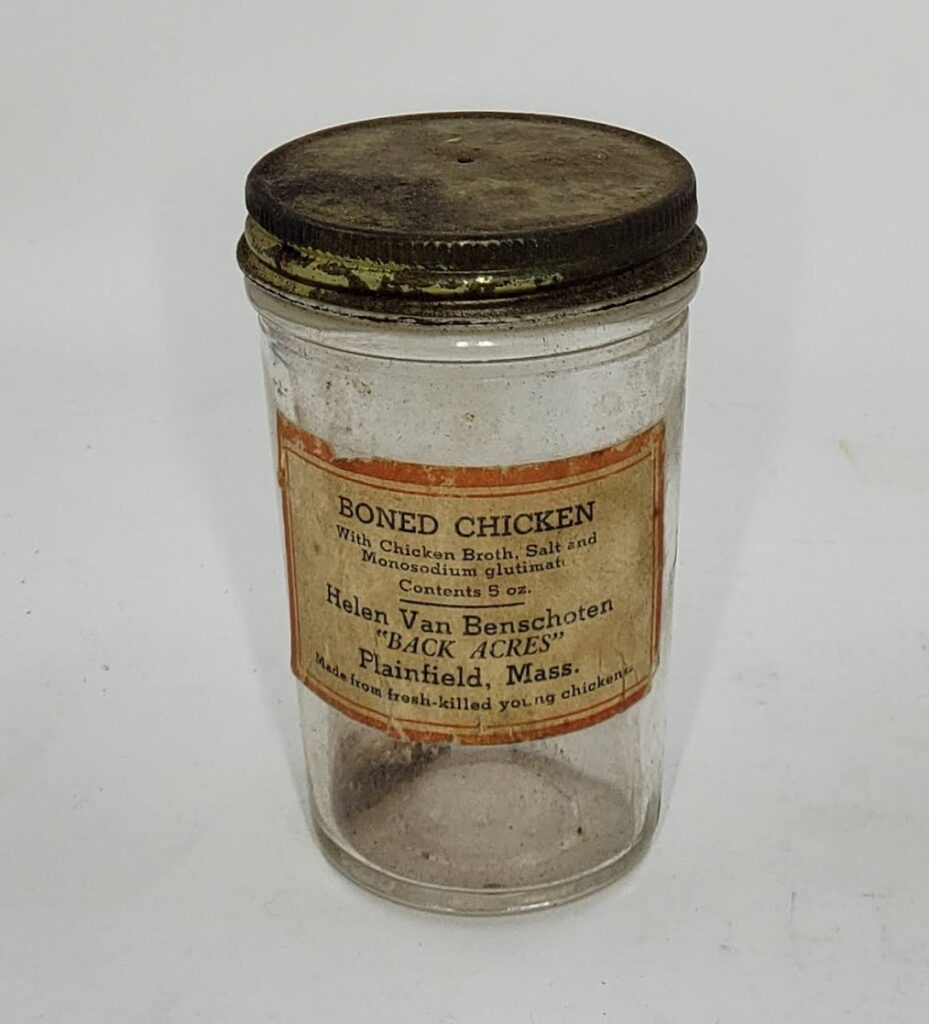
A new chapter began in 1941 when Helen S. Van Venschoten purchased the property and established a distinctive chicken-canning enterprise on the farm. The business produced canned chicken, chicken-liver pâté, jams, and jellies, supplying specialty markets and upscale restaurants. The operation also supported a large market garden, and many local residents found employment there. During this period, Mr. Van Venschoten became known locally for refinishing antique furniture and Helen was a teacher and active in the community.
In 1962 the property was purchased by John J. McMahon (1906–1977) and Dorothy (Dot) Bryn McMahon (1910-1999), who became active members of the Plainfield Historical Society and helped foster interest in the town’s past. Following their deaths, the house was acquired by Alfred James Feeley (1939–2019) and Judith Hart Feeley (1942–2020), together with William Money and Penn Moulton. During their ownership a wing was added to the east side of the house, along with the construction of a large horse barn on the property.
The most recent transformation came in 2020 when the land and farm were purchased by High Plains Farm, a licensed cannabis cultivation operation. In time, the historic house was separated from the agricultural property and sold independently in 2025.
Through nearly two and a half centuries of ownership—by soldiers, farmers, entrepreneurs, and preservation-minded residents—the old house at Back Acres Farm has quietly reflected the evolving economic and social history of Plainfield itself.
Architectural Description
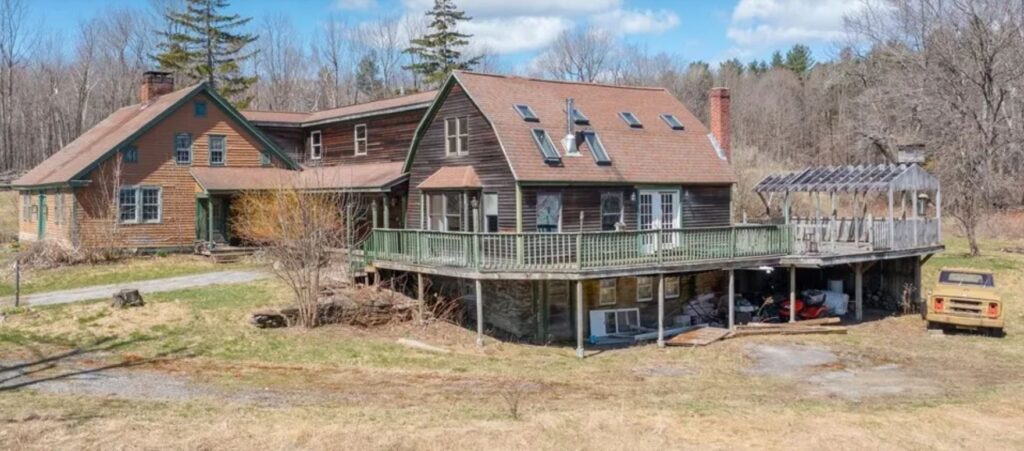
Two expansion campaigns have altered this Federal-style Cape without diminishing its character. The one-and-a-half story, center-chimney house is five bays wide and two bays deep, with small windows set close to the eaves and a low stone foundation. Its tall Federal doorway features a five-light transom and an unusual eight-panel door framed by reeded pilasters.
An early rear extension created a saltbox roof for additional space, while a 20th-century gambrel-roofed wing was added on the east and connected to a large barn. The property also includes barns with horse stalls, an indoor and outdoor riding arena, pastures, and other farm structures.
This project was partially funded by the Plainfield Cultural Council and the Plainfield Historical Society