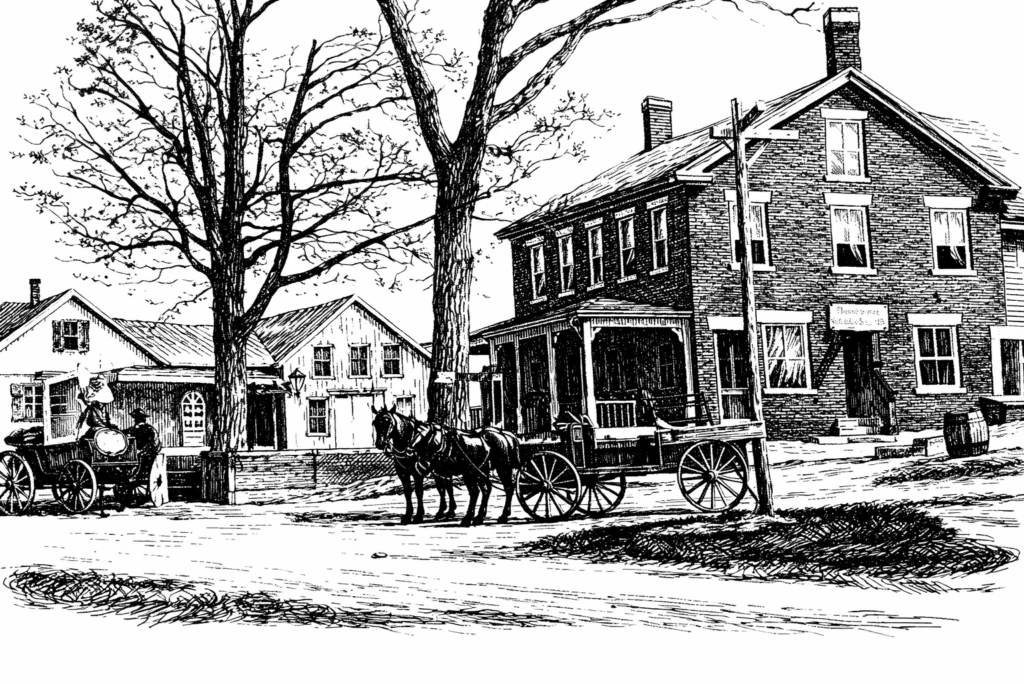
This building stands as one of the few remaining examples of early brick architecture in Plainfield, fashioned from bricks manufactured locally. Lt. Joshua Shaw (1736-1813) and his son, Lt. Thomas Shaw (1765-1827), purportedly owned a brickyard on Meadow Brook, where it is believed the bricks for this structure were produced. Built in 1820 this historic home served as the general store in Plainfield from the mid-1800s until the late the 1920’s and was, and still is, a landmark in the center of the town. The house was originally referred to as the “Old Brick Store on the Commons,” where the town’s militia trained.
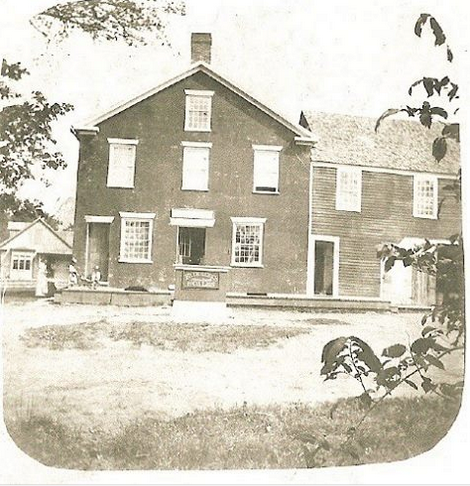
It’s interesting to note that these bricks are identifiable due to their slightly narrower dimensions and the small stones and minerals in the clay, making them unique to the region and time period. This distinctive quality can help historians and preservationists trace the use of these locally made bricks in various buildings and structures throughout Plainfield. Some of the larger chimneys in town were also constructed with bricks from this brickyard and provide a historical context for the use of these bricks in various architectural elements in the area. The presence of signs of the brickyard along the banks of the Meadow Brook still today is a tangible connection to the past and adds to the historical significance of the area. These bricks, along with the buildings constructed using them, offer a glimpse into the history of Plainfield and the craftsmanship of the time.
The land on which the house sits was owned by one of the original settlers in the area, Simon Burroughs (1719-1799). A deed search shows that from 1803 to 1816, Josiah Edson Packard, one of four brothers who had moved to Plainfield, owned this property. In 1816 John Mack (1779-1833), a prominent businessman and selectman in Plainfield, bought the corner lot from Packard. Mack realized the value of the “corners,” a busy crossroads in Plainfield, having previously owned a store and tavern diagonal to the brick house. And so, starting in 1816, Mack had the brick building built specifically to run as a store.
The Mack Family
John Mack was born on April 27, 1779, in Middlefield, Massachusetts to Elisha Mack (1727-1783) and Mary Ellis (1733-1819), the youngest of sixteen children. His father died when John was just four years old, reportedly gored by an ox. He was then raised by his oldest brother, Col. David Mack (1750-1845), who owned a general store in Middlefield, that was only recently demolished, thus starting John’s life as a merchant. John married Sarah Richards (1787-1866) on September 25,1808. Sarah’s father, Deacon James Richards, (1757-1842) was one of the earliest settlers of Plainfield; served in the Revolutionary army; and was a distinguished member in church and town affairs, thus helping John Mack with his many connections to the movers and shakers of the town. Sarah’s brother, Rev. James Richards (1784-1822), while a student at Williams College, joined four classmates in the summer of 1806 for a prayer meeting in a field in Williamstown. When a thunderstorm forced them to take shelter beside a haystack, they continued their discussion and committed themselves to foreign missionary work. This “Haystack Prayer Meeting” led to the founding of the American Board of Commissioners for Foreign Missions, one of the nation’s most influential missionary societies.
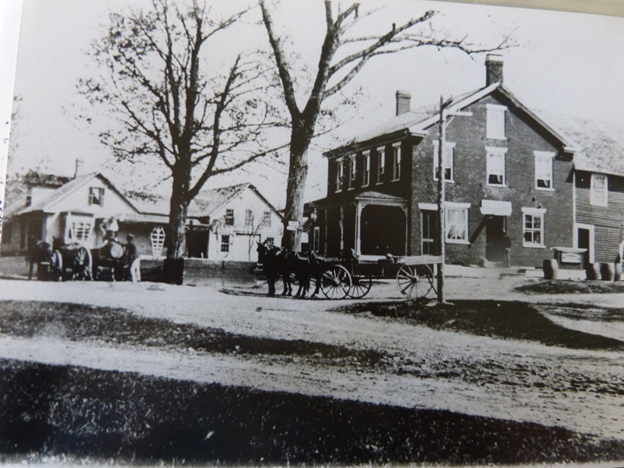
John Mack did a thriving business in Plainfield, becoming one of its leading businessmen and real estate dealers. The types of goods that were sold in his store were liquors, molasses, salted codfish, loaf sugar, chintz cloth, thread, crockery, hardware, medicines, and many of the items needed to run a household or farm during the early 19th century.
The Macks soon became well off for the times. They were successful in their real estate ventures and played a significant role in the community of Plainfield. By acquiring real estate and giving out loans to residents, they likely contributed to the local economy and the well-being of the community. Additionally, buying up mortgages and assisting residents who were looking to move out west shows a commitment to helping others and supporting those who sought opportunities in new lands opening up in the American midwest.
John Mack soon became a fixture in Plainfield, over the next thirteen years serving as a captain in Plainfield’s 3rd Artillery, a selectman, Town Clerk, State Representative, Justice of the Peace, and Postmaster. Unfortunately, he died unexpectedly on February 15, 1833, in Plainfield, at the age of 53, and is buried in the Hilltop Cemetery.
One of the Mack’s sons, James Richard Mack (1817-1838), was an “Indian Agent” in Ohio, hired under a new law enacted by Congress. The Indian Removal Act was signed into law by President Andrew Jackson on May 28, 1830, authorizing the President to grant lands west of the Mississippi in exchange for Indian lands within existing state borders. This was a significant and controversial piece of legislation that authorized the forced removal of Indigenous peoples from their ancestral lands to lands west of the Mississippi River. This policy had profound and devastating effects on the Native American population, leading to the Trail of Tears and other tragic events. The role of Indian Agents was to establish relationships with Indigenous nations and implement government policies related to land acquisition and removal. James Richard Mack’s involvement in this process would have likely put him in a complex and challenging position, given the hardships and injustices faced by Indigenous peoples during that period. After leading a group of Native Americans to the West, he died on his way back home in Detroit in 1838 at the age of twenty-one.
That same year his brother John, Jr. (1809-1838) and brother David (1820-1838) both died in Ohio. A sister, Laura Mack (1815-1838), also died young in Plainfield, making 1838 a tragic year for the Mack family.
Of the remaining Mack siblings, Clarissa Lyman Mack (1823-1856) married Henry Hunt Forsyth, a merchant, and moved to near Toledo, Ohio. Sarah Mack (1810-1868), taught school for young girls in Charlemont and went on to marry Reverend William Pomeroy Paine (1802-1876), a pastor in Holden, Massachusetts. Mary Mack (1825-1903), who was partially blind, went to Mt. Holyoke Seminary School, then married Reverend Hemmingway Jacob Gaylord (1813-1901), who was the pastor in Plainfield until 1851 when the family moved to Delaware and later to Kansas. Charles Mack (1827-1868), moved to Greenbush, New York, where he became a merchant. Sister Julia Mack (1831–1894) married William Holmes Hallock (1826-1894), son of Gerard Hallock (1800-1866), and grandson of Reverend Moses Hallock (1760-1837).

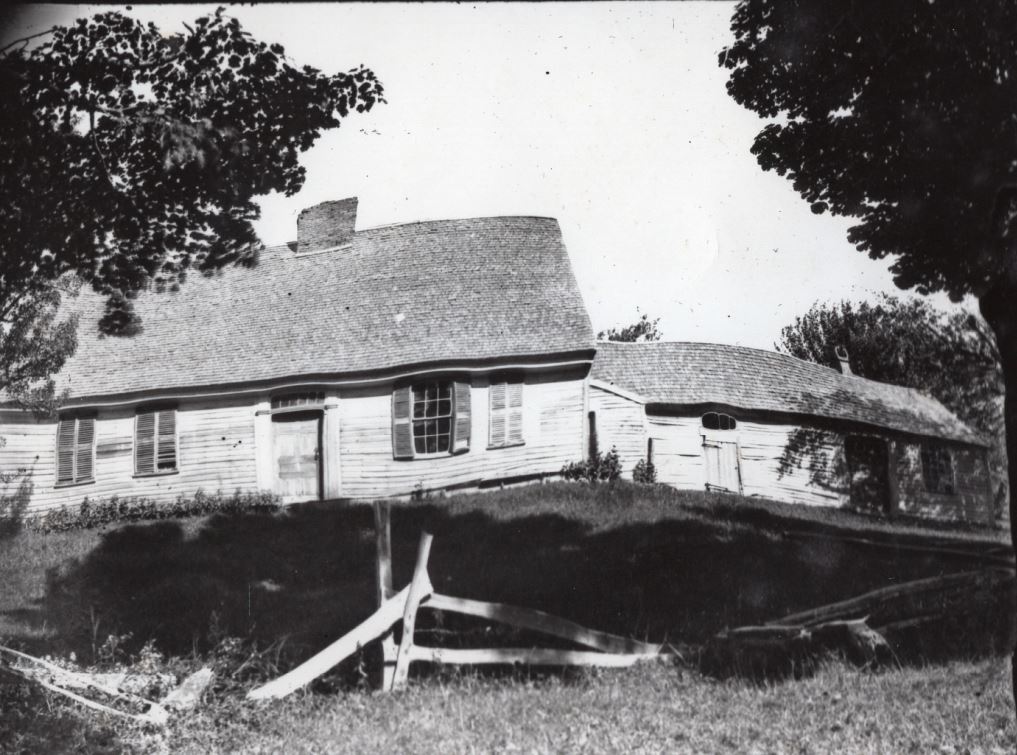
In 1838, along with the hardship of having four of her eleven children dying, Sarah Mack apparently fell on hard times, both emotionally and financially. The “Panic of 1837” was a financial crisis in the United States that triggered a multi-year economic depression. Fiscal and monetary policies in the United States and Great Britain, the global movements of gold and silver, a collapsing land bubble, and falling cotton prices were all to blame. Neighbor and relative Dr. Samuel Shaw (1790-1870) took over the Mack estate and helped Sarah Mack move into the old Moses Hallock house which stood where the current Shaw Memorial Library and Town Offices are located.
The business of John Mack was carried on by his son, John Mack, Jr. (1809–1838) for a year or two, but was then turned over to his brother, Elisha (1812-1890) who in 1836 gave up all claims to the property to his mother, Sarah. Both brothers moved to the area near Toledo, Ohio where Elisha set up another general store.
The Shaw/Stowell Family
In 1839 we find the “Brick Store” in the hands of Col. Josiah Shaw, Jr. (1785-1863), brother of Dr. Samuel Shaw, and his business partner, William Stowell (1801-1887), who renamed the store Shaw & Stowell. Stowell had previously been partners in a small store across the way from the Plainfield Congregational Church, called Stowell & Torrey.
Records indicate that Shaw & Stowell were buying merchandise from as far away as New York City to stock their store and appeared to have a thriving business for a time, but in 1842, due to the depressed economy, Stowell took advantage of the newly enacted Federal Bankruptcy Law of 1841, that was favorable to debtors, and declared bankruptcy, with the firm owing an estimated $3,500 that had been accrued from 1836-1842. A dispute ensued between the two partners, with Shaw refusing to release any of the account books for the store. Eventually, this debt was paid off at 46 cents on the dollar. William Stowell would run a mill with his brother David for a few more years in Plainfield before moving to Chatham, Ohio, to be with his children and many other former folks from Plainfield. Josiah Shaw, Jr. continued to live on South Central Street in Plainfield with his brothers helping him to absorb the financial losses associated with the store.
The town took over the property due to unpaid town taxes of $11.74 and rented the house to Wanton Carr Gilbert (1818-1854) for nearly a year in order to recoup some of the unpaid taxes. He continued to run the store until 1854 when he died. In 1856 the store was owned by Lucy Elvira Richards Gilbert (1820-1903), wife of the late Wanton Gilbert. One year later she married Rev. Solomon Clark (1811-1902) and sold the store to Leonard Campbell (1811-1893) and his wife, Lovisa Bisbee Campbell (1815-1906).
The Packard Family
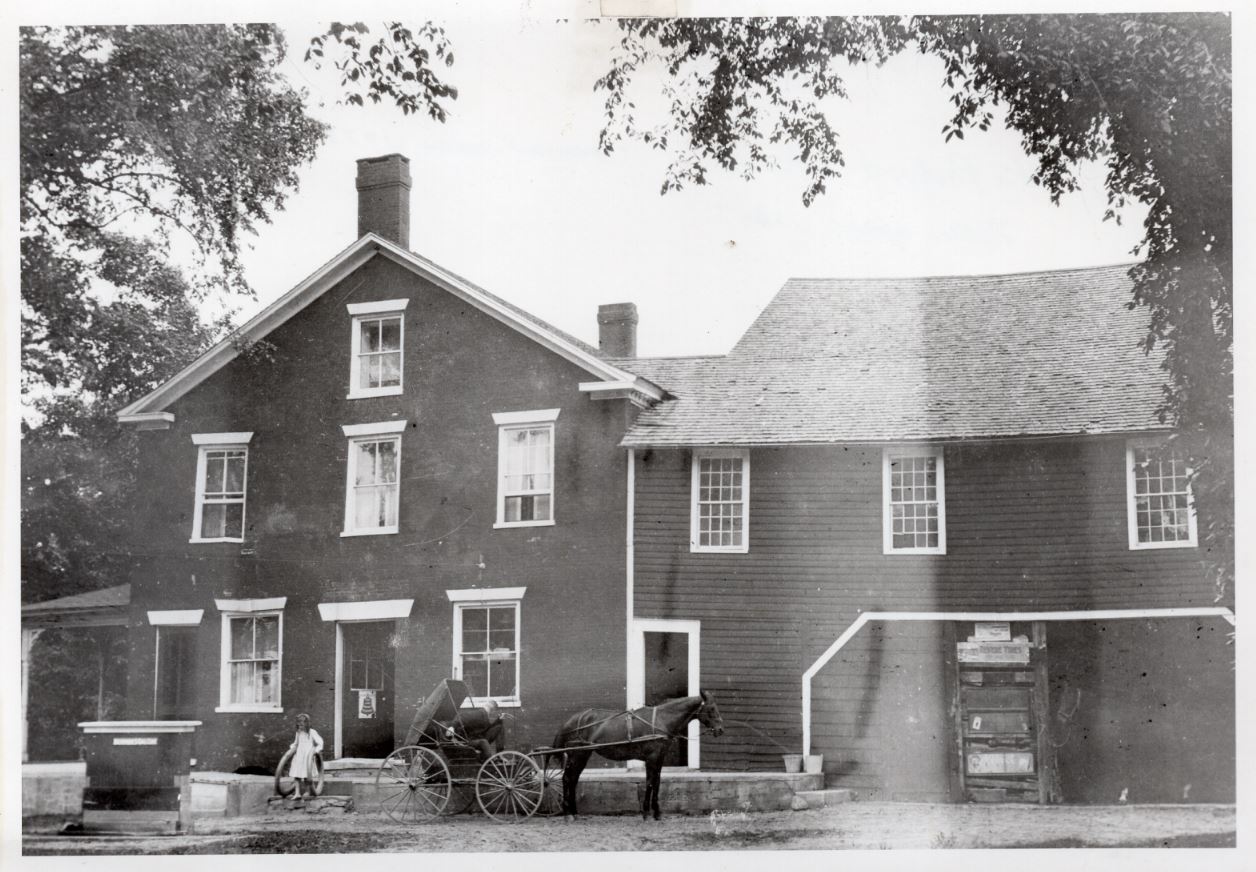
Again the store changed hands in 1873 when the store was purchased by Charles R. Burt (1846-1914) and his wife Mary Angelia Shumway(1850-1927), who stocked it with goods and carried on the business for some four years, until they sold out to widow Elizabeth A. Stockwell Packard (1837-1906), known as Lizzie, who had previously worked for the Burts. Elizabeth’s husband, Nahum Stowell Packard (1834-1871), was the nephew of William Stowell and had died at the age of 37. Elizabeth, who kept the store with the assistance of her sons, Bertrand Adelbert Packard (1862-1902) and Harold Stockwell Packard (1860-1935), ran the store for seven years before allowing her son Harold to take over.
For the next seventy years the “Brick Store ” remained in the hands of the Packard family then known as “Packard’s Store”. Harold Packard was a smart businessman, buying and selling stocks, AT&T and US Steel, to name a few, and did quite well, eventually owning three stores in the area – one in Plainfield, one in Cummington, and another in Williamsburg, The store in Cummington, next to the bridge leading to Plainfield, was run by his daughter Mari Eliza Packard (1890-1978) and her husband Leon Arthur Stevens (1888-1970). The store in Williamsburg was run by Harold’s other daughter Dorothy Wells Packard (1897-1984) and her husband Charles Augustus Bowker (1892-1947). Their daughter Mary Bowker Connell (1925-2019), spent the summers in Plainfield with her grandparents. She revisited the brick house in 2015 and 2019 and had many tales to tell of the brick house.
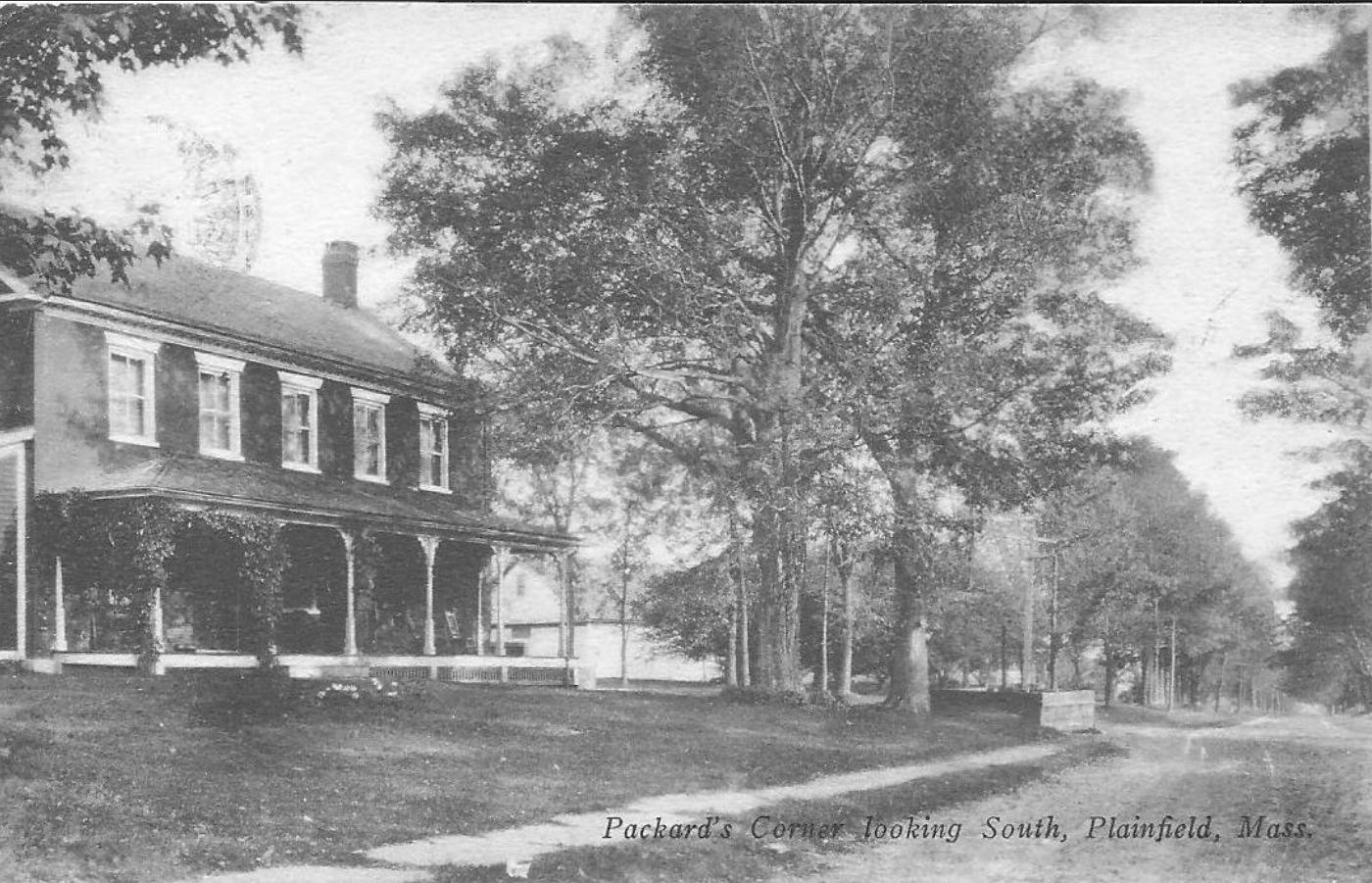
Harold Packard was the Town Moderator, Town Treasurer, served in the Massachusetts House of Representatives – you name it, he did it. He was described as ‘the type of man that was busy all the time!” He was president of the Hilltown Agricultural Society and played a role in making the Cummington Fair into a success. Records show that at one point Harold paid the highest taxes in the town of Plainfield.
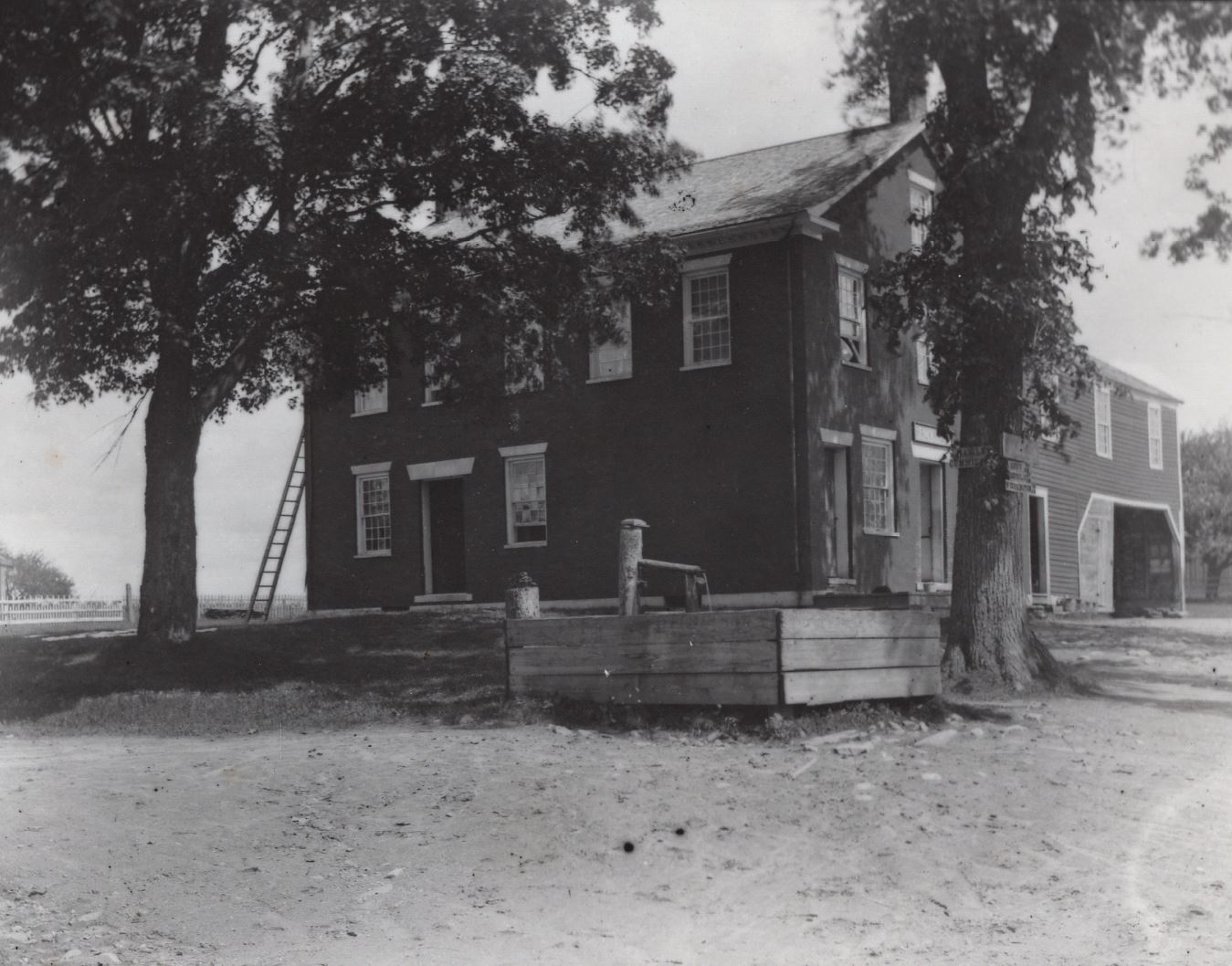
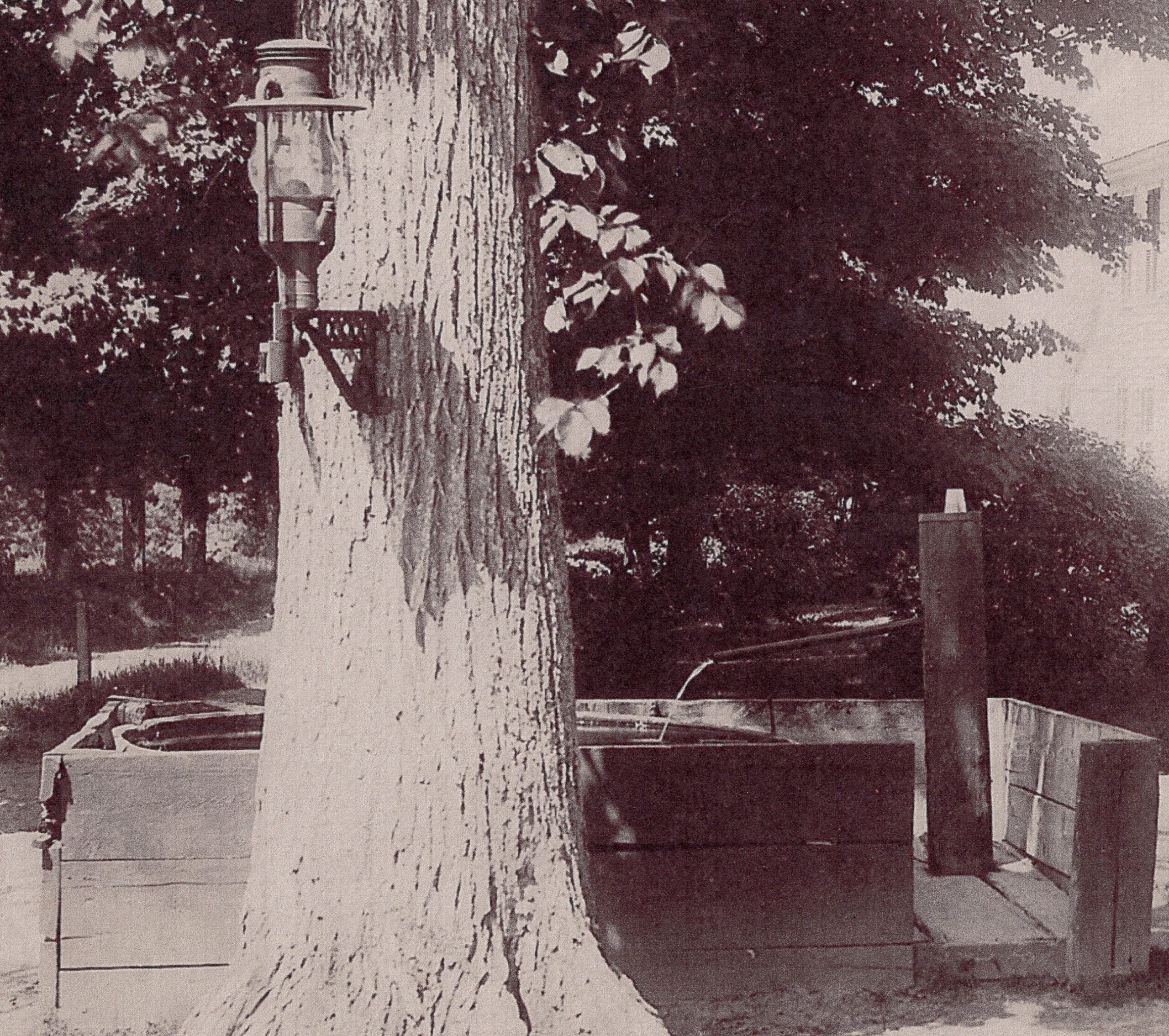
During one particularly furious thunderstorm a lightning strike hit the cistern in front of the house so powerfully that it blew out some of the windows in the house. Lizzie Packard hid in a small upstairs room with no windows every time she heard thunder from then on.
The Packards bought a second home in Altamonte Springs, Florida, where they would spend the winters and Harold grew fruit trees, his favorite hobby. He had a small apple orchard on his property in Plainfield and built the “Apple Storage barn” that is still standing and has been turned into a home.
In 1935, after a short illness, Harold died at the age of 74 at his home in Plainfield and is buried a short distance from his house in the Hilltop Cemetery. His wife, Lizzie died in 1948 and is buried next to her husband.
From 1949 the deeds show that the house and most of its property were owned by Margaret Hargraves Romer and then to Edward and Viola Romer.
From Store to Museum?
In October of 1960 the house was purchased by Thomas T. Packard (1902-1975), founder of the Plainfield Historical Society. Devoted to preserving the history of his beloved town of Plainfield, Packard’s dream was to use the house to showcase items from the historical society’s collections. He wrote about this property, “An appropriate homesite for preserving and exhibiting such records, and objects of interest is very important. It should be large enough for accumulated treasures on hand in the present and in the near future; as nearly fireproof as possible, and if possible, a building of historic interest in itself.”
In 1963, Clara Hudson, neighbor and granddaughter of Dr. Samuel Shaw, died, leaving their family home in a trust to be used for historical purposes, so Packard’s project never came to fruition and with in a few years he sold the property to neighbors, Umberto and Marguerite Balduzo, who owned it from 1963 until 1997, occasionally selling antiques and penny candy from the first floor of the house. The house is often still referred to as ‘Maggie’s Place’.
The house next was owned by Maggie’s son Dennis and Vivian Beaudoin until 2014 when it ended up in the hands of the Greenfield Savings Bank, eventually being auctioned off and was bought by Matthew Stowell.
The Return of a Stowell
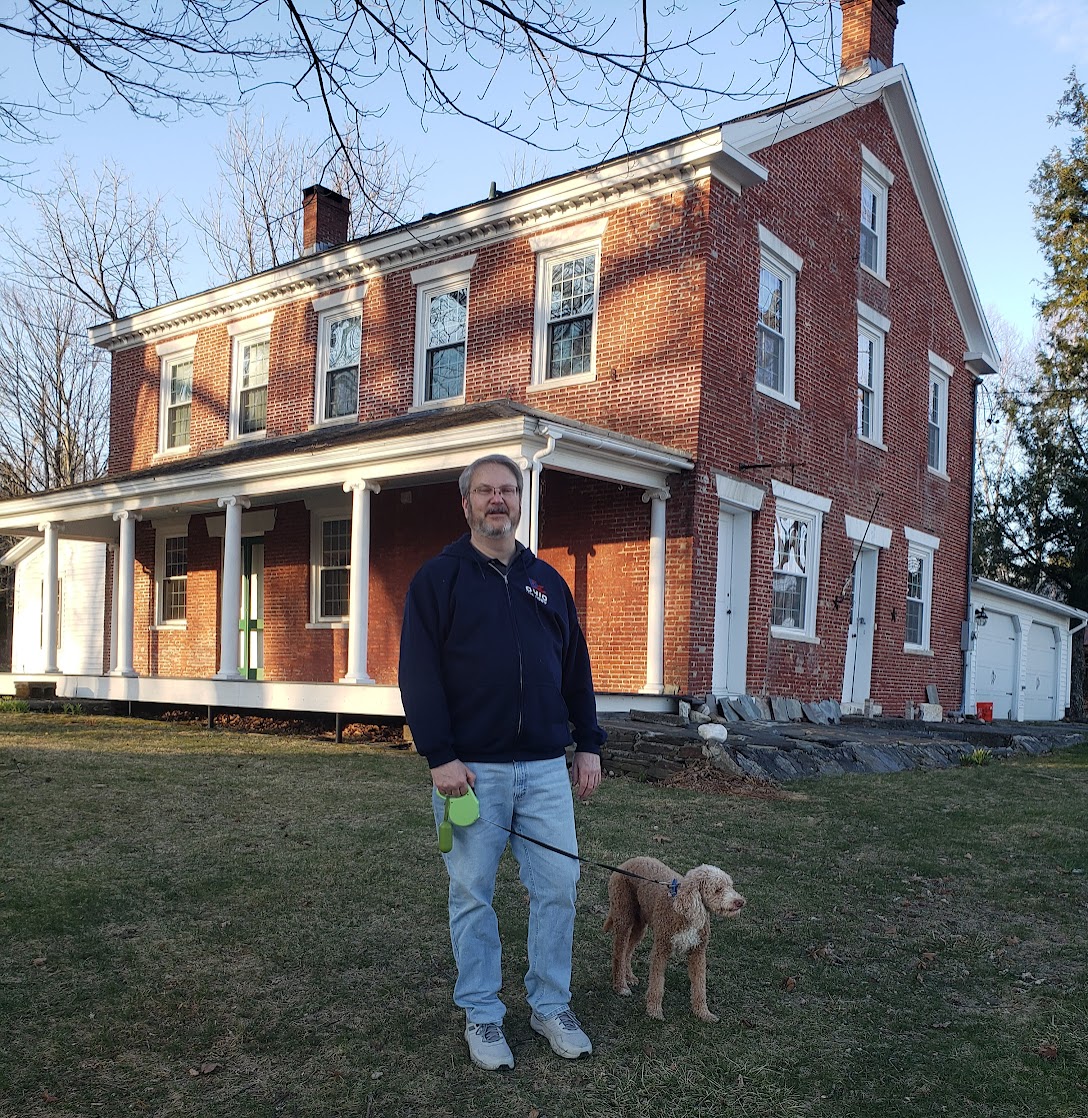
Matt Stowell was born and raised in central Ohio. His interest in history led him to a career as a middle school history teacher, with a specialty in American history. He was close to his mother’s family in Ohio, but knew little about the Stowell branch on his father’s side, so he decided to start researching his ancestry to share with his students what his ancestors were doing during important events in American history.
Matt’s research eventually led him to Plainfield. At the time, most of the town’s history had not been digitized, so in the early 2000s he started spending part of his summers visiting Plainfield to do his research, renting a small cabin in West Cummington. William Stowell is Matt’s Great, Great, Great Grandfather. One of the first things Matt did upon discovering this connection to the house was to pay off the $11.74 that had been owed when his relative lost the store due to back taxes. Feeling a family connection to Plainfield, he started looking for property to buy in the area. In 2014, while still in Ohio, he saw that the ‘Brick store” was going up for auction.
Knowing the connection his family had with the property, he decided to make a bid on the house. The auction took place during a school day, and as Matt’s students cheered him on he placed a bid. Eventually, the bid was accepted and in 2019, Matt retired as a school teacher and moved into the house, where he continued to conduct research on his family.
Matt has had the upstairs of the house renovated, even replacing some of the bricks in the house with other bricks he has found on the site of the original brick school, the site of another brick home that has recently been razed, and from the original brickyard along the Meadow Brook.
Matt immediately became an important member of the Plainfield community and is an active member and treasurer of both the Plainfield Historical Society and the Plainfield Congregational Church. One could often see him sitting on his front porch with his dog chatting with neighbors and friends, just as his relatives had done in the mid-19th century!
In 2023 Matt made the decision to return to Ohio and the house was sold to a new family. Matt often returns to Plainfield to conduct local historical research and to visit friends.
Architectural History
The “Brick Store” is an excellent example of Federal architecture. Federal architecture, also known as Federalist architecture, was a prevalent architectural style in the United States during the late 18th and early 19th centuries, particularly during the Federal period (1785-1820). It is characterized by its symmetry, use of brick, and classical elements, often influenced by the neoclassical style. It is a two-and-a-half story, brick building under a side-gable, with an asphalt shingle roof that has a pair of interior chimneys.
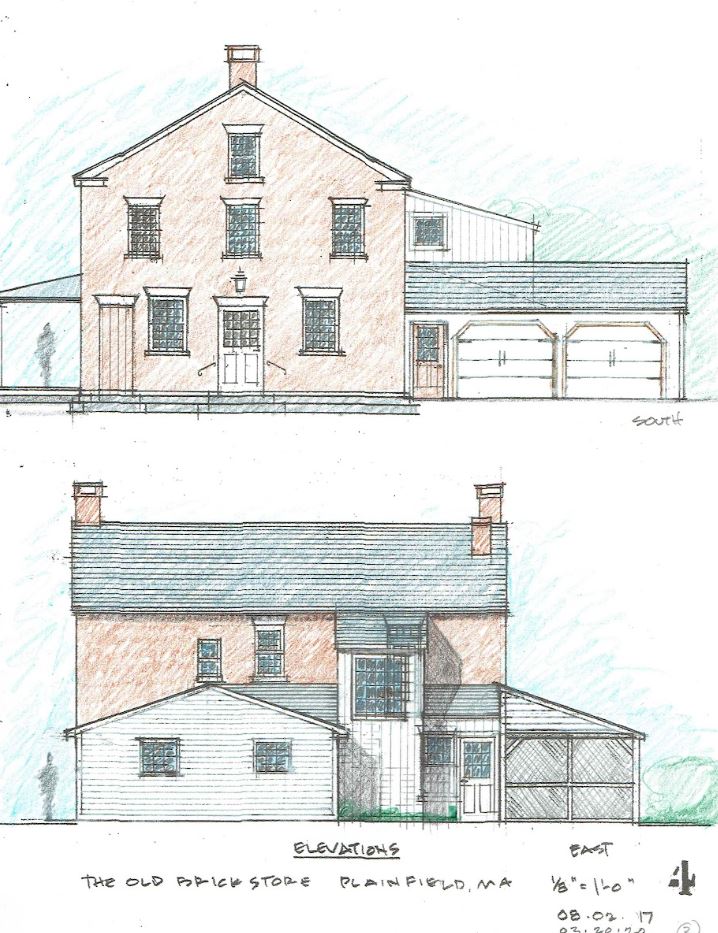
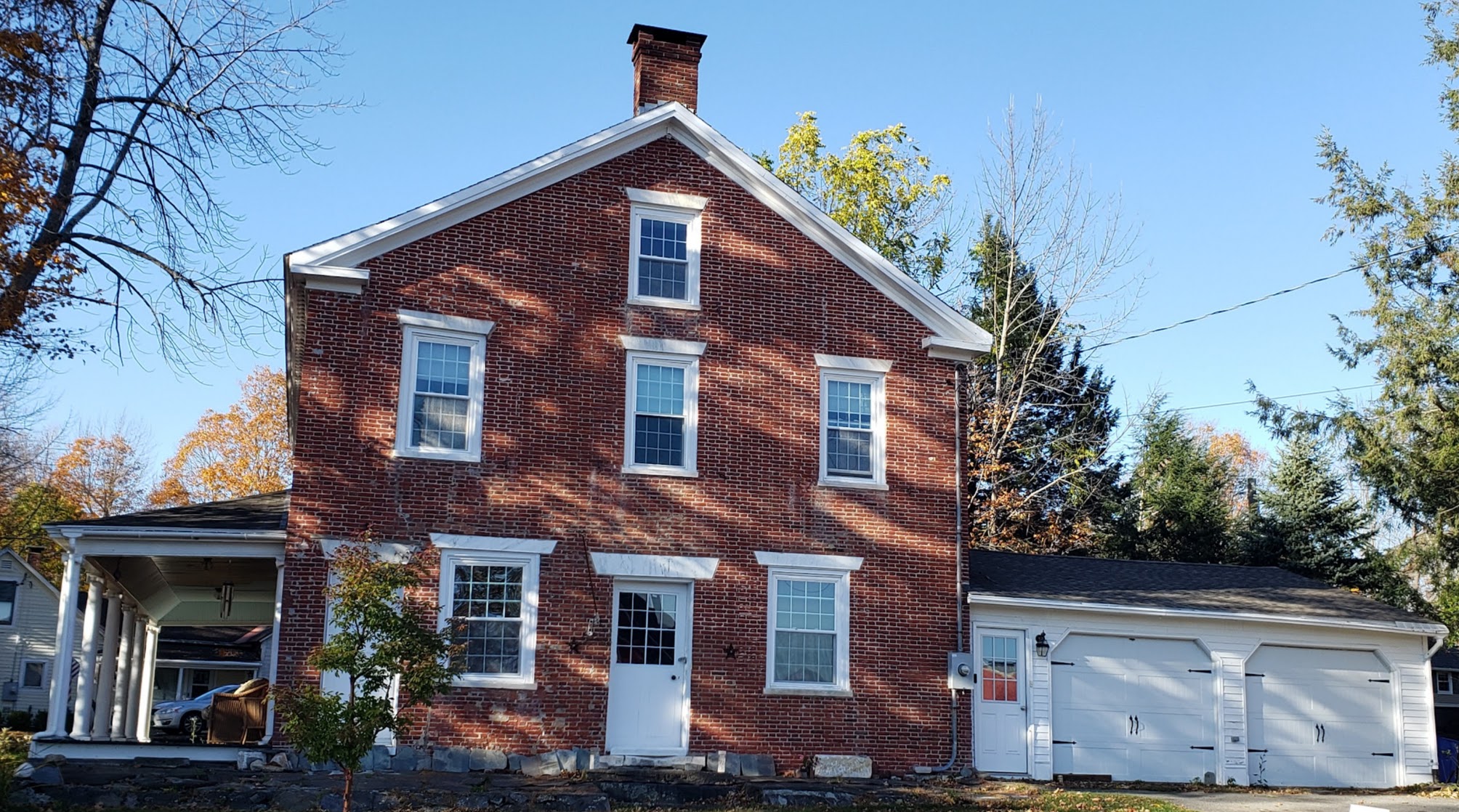
The west-facing building is five bays wide at the second floor, but at the first floor it is only three bays wide with an off-center, principal entry beneath an over-scaled, splayed stone lintel. The south end of the first floor facade is blind, presumably to accommodate a staircase used to get to the second floor residence.
The building makes use of its corner location for commercial purposes by having two secondary entries on its south facade that is passed by the main road through Plainfield. The south facade is, accordingly, four bays wide at the first floor. All window lintels are splayed, a Federal stylistic feature for doors and windows that was used more often in the eastern part of the state than the western. The brickwork on the front sides is Flemish bond. Many windows have replacement 12/12 vinyl sash with fake muntins, some have wooden 2/2 sash. The eaves are boxed and make returns in the gable end. Indicative of the level of detailing is the use of curved modillion blocks at the cornice line beneath the eaves. On the north facade, an added, one-story shed roof addition runs along much of the main block of the house. There is also an ell on the east facade, which contains a garage, and there is a hipped roof porch across the west facade that rests on ionic columns.
The architectural features, historical context, and modifications made to the building over time provide insights into the significance and style of this structure, making it an interesting piece of Plainfield’s architectural heritage, therefore this house is in the Plainfield Historic District.
This project has been partially funded by the Plainfield Cultural Council and the Plainfield Historical Society